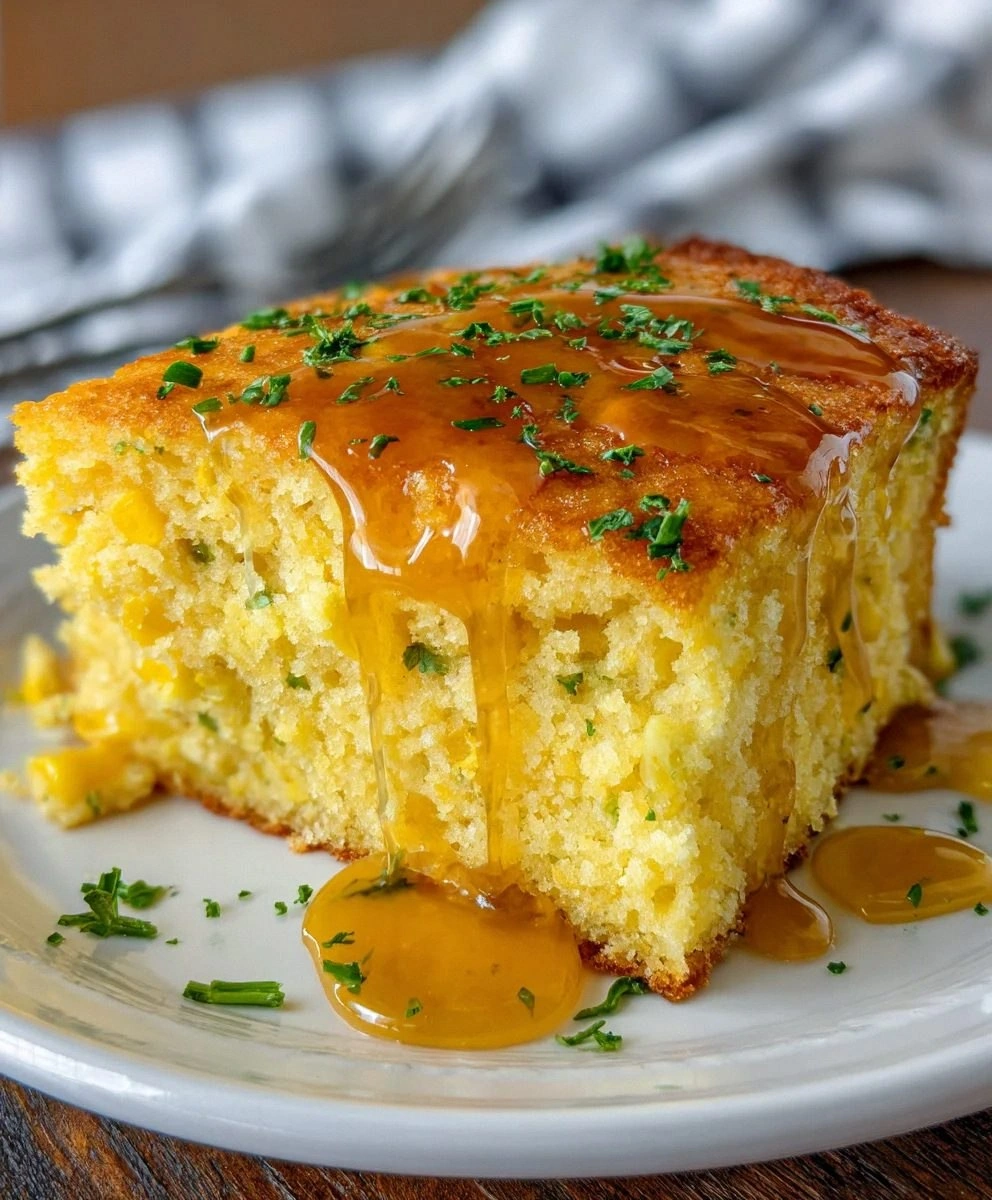
Picture this: it is eleven-thirty on a Sunday morning, the football pre-game chatter is humming in the background, and I have just one job — bring a side dish that makes everyone ignore the main course. I had promised the gang "something corny," but last night my go-to mac and cheese split like a bad breakup, and the fridge looked like a tornado hit it. All that stared back at me were a couple lonely cans of corn, half a block of cheddar, and a sticky jar of honey I had bought for a tea habit that never quite stuck. Ten minutes of muttering, one small kitchen dance, and a prayer to the casserole gods later, this golden beauty was born. That first bite? Imagine sweet summer corn wrapped in a fluffy, cheesy blanket with a honey glaze that crackles like crème brûlée under the fork. I literally hissed at my roommate when he reached for seconds — and then promptly ate half the pan myself before halftime. If you've ever wanted a side dish that doubles as a conversation stopper, welcome home. By the time you finish reading, you'll know why this is hands-down the best version you'll ever make at home, and exactly how to nail it without breaking a sweat.
Let's get one thing straight: most corn casseroles are the culinary equivalent of beige hotel carpeting — they cover the basics, but nobody remembers them the next morning. They are either rubbery from too much boxed mix, or sickly sweet, or so dense you could patch a sidewalk with them. My Honey Glazed Corn Casserole is the rebellious cousin who shows up in sequins: tender niblets suspended in a cloud-like soufflé, a honey-butter crown that bakes into a glossy, ever-so-slightly tacky shell, and edges that crisp like the corner of your favorite brownie. The aroma drifting from your oven will wrap around your kitchen like a warm blanket, equal parts buttered movie-popcorn and caramelized summer field. And the texture? Think spoon bread meets corn pudding meets mac and cheese, with a gentle wobble that firms into a clean slice. I dare you to taste this and not go back for seconds; I've never seen it happen.
Before we dive into the details, here's a spoiler alert: the secret weapon is time. Not active time, just a little patience while the cornmeal hydrates, the honey caramelizes, and the eggs puff. The ingredient list is grocery-cart friendly, the method is forgiving, and the payoff feels like you enrolled in a fancy culinary course while you weren't paying attention. Stay with me here — this is worth it. Let me walk you through every single step — by the end, you'll wonder how you ever made it any other way.
What Makes This Version Stand Out
- Honey-First Philosophy: Instead of stirring in a token teaspoon, we glaze the top with an outrageous drizzle that seeps down and creates a lacquer-like finish. The result is a sweet-savory tug-of-war that keeps every bite interesting.
- Triple-Threat Corn: Fresh kernels for pop, creamed corn for silk, and cornmeal for structure — basically a symphony of maize rather than a one-note side dish.
- Crispy-Cheesy Edge: We bake in a butter-rimmed dish that basically fries the perimeter. You get those coveted corner-brown bits without burnt undertones.
- No Boxed Mix, No Guilt: Say goodbye to mysterious powder packets. You control every grain of salt and sugar, so the flavor tastes like real food, not a science experiment.
- Make-Ahead Magic: Stir the wet team together the night before, cover, and refrigerate. Next day you just whisk once, pour, slide into the oven, and pretend you woke up early.
- One-Bowl Wonder: Everything happens in a single mixing vessel. Fewer dishes means more time to perfect your victory dance when the compliments roll in.
Alright, let's break down exactly what goes into this masterpiece...
Inside the Ingredient List
The Flavor Base
Fresh corn kernels are non-negotiable when cobs are plump and cheap at summer markets. Their milk squirts when you bite down, reminding you why corn is technically classified as a sweet grass. If you're reading this in February, high-quality canned corn (drained and briefly rinsed) will rescue you, but pick the "no salt added" version so you control the seasoning. Creamed corn, on the other hand, is the silky secret agent. It looks humble, but it floods the casserole with moisture and a gentle pudding vibe that dried-out versions everywhere are missing. Skimp on it and you'll get a brick; use the full can and you earn a velvet cloak.
The Texture Crew
Cornmeal is the scaffolding. I grab a medium-grind yellow cornmeal because it still has personality — you will taste tiny flecks that popped out of a kernel not long ago. Baking powder lifts the whole operation, creating micro bubbles that keep the casserole from turning into corn-flavored concrete. Do not swap in baking soda; without an acid to activate it you'll taste metallic regret. Eggs bind and puff, but only if you beat them enough to whip in air. You're looking for a sunshine-yellow froth that ribbons back onto itself for three Mississippis before disappearing.
The Unexpected Star
Let's talk honey, the Beyoncé of this dish. A mild wildflower honey melts beautifully without aggressive floral punches. If all you have is buckwheat honey, go lighter on the glaze — its molasses-like swagger can bully the corn. Heat causes honey's sugars to blister, so we wait until mid-bake before we paint it on top. That way you get a glassy sheet, not a bitter burn. And hey, if you've ever struggled with casseroles that ooze liquid at the bottom, you're not alone — and I've got the fix: a light cornmeal dusting on the greased dish acts like a raincoat.
The Final Flourish
Cheddar brings nutty, salty backbone. Buy a block and shred it yourself; pre-shredded cellulose makes the casserole grainy and refuses to melt smoothly. Sour cream sounds like an afterthought, yet its lactic tang is the high note that keeps honey from turning dinner into dessert. Unsalted butter lets you control salt precisely — sprinkle flaky sea salt at the end for a gentle crackle between teeth. Garlic powder? Just a whisper, but skip it and you'll notice a hole where warmth should live.
Everything's prepped? Good. Let's get into the real action...
The Method — Step by Step
- Preheat your oven to 375°F (190°C). Position the rack one notch below center — this encourages browning without scorching the honey later. While the oven wakes up, butter a two-quart casserole dish with unsalted butter, then dust the interior with a teaspoon of cornmeal. Tilt the dish like you're swirling a glass of Merlot until every crevice is filmed. This micro-coat forms a moisture barrier, so your slices slide out like silk scarves instead of crumbling like a sandcastle.
- In a big mixing bowl, whisk together cornmeal, baking powder, salt, black pepper, and garlic powder until the colors marry. You want no streaks of white or pale green; uniformity now means no salty surprises later. Use a balloon whisk — your fork is great for eggs but lousy at aerating dry powders. This thirty-second step sounds trivial, yet it jump-starts the rise and distributes seasoning evenly, so every cube of casserole tastes identical.
- Melt four tablespoons of butter. You can zap it in the microwave, but I like a small saucepan because browned butter edges bring nuttiness. When the foam subsides and the milk solids turn chestnut, pull it off the heat immediately — carry-over cooking is real, and burnt butter tastes like regret. Let it cool three minutes so it won't scramble the eggs, but don't let it solidify. Pour the liquid gold in a slow stream into the dry mix while whisking. The mixture will look like wet sand; that's perfect.
- Crack the eggs into a separate bowl. Yes, we dirty an extra dish, but fishing out shell shards from a vat of corn sludge is nobody's hobby. Whisk until the yolks and whites form a homogeneous sunrise color and thick frothy bubbles cap the surface. Fold in sour cream, creamed corn, and honey. The batter will look like a pale milkshake, and it should coat a spoon but still drip off in lazy ribbons.
- Fold in fresh (or well-drained canned) corn kernels and half the shredded cheddar. Use a silicone spatula and sweep from the bottom up, turning the bowl a quarter twist after each fold. This motion traps air and prevents you from over-mixing, which would activate gluten and turn the casserole rubbery. The mixture should look like confetti suspended in clouds — light, bouncy, barely holding together.
- Pour the batter into your prepared dish and smooth the top with an offset spatula or the back of a spoon. Tap the dish on a folded towel a couple times to dislodge sneaky air pockets that can create sinkholes. Sprinkle the remaining cheddar over the surface; as it bakes, the cheese forms a mottled crust that signals doneness later. Slide the dish onto a foil-lined sheet pan (catches overflow) and park it in the oven for twenty minutes of uninterrupted magic.
- While the casserole rises, warm three tablespoons of honey with one tablespoon of butter until fluid and glossy. You want it thin enough to paint but thick enough to cling. When the timer hits twenty minutes, quickly pull the rack halfway out and drizzle the honey glaze in a zig-zag pattern. Don't pour directly onto one spot or you'll create a sticky sinkhole. Close the door immediately and bake another ten to twelve minutes, until the edges caramelize to deep amber and the center jiggles like set custard.
- Transfer the dish to a wire rack and rest five minutes — this is the hardest part because the kitchen smells like a honey-butter sunrise. The residual heat finishes cooking the center without drying the edges. Serve warm, garnished with chives or parsley if you crave color. A spoonful should hold its shape yet slump invitingly, like comfort on a plate.
That's it — you did it. But hold on, I've got a few more tricks that'll take this to another level...
Insider Tricks for Flawless Results
The Temperature Rule Nobody Follows
Cold dairy is the enemy of smooth batters. Pull sour cream and eggs out thirty minutes before mixing, and you'll avoid lumps that refuse to blend later. Room-temperature ingredients trap air more efficiently, giving the casserole a lighter crumb. If you forget (hello, every Tuesday of my life), submerge the egg in warm tap water for five minutes and microwave the sour cream for ten seconds, stir, repeat just until it loses the chill.
Why Your Nose Knows Best
Most recipes give visual cues, but smell is the reliable alarm. When the honey glaze hits the heat, you'll notice a butterscotch aroma that grows deeper every minute. That scent means sugars are caramelizing; when it smells like toasted marshmallow, yank it out. Overbaking beyond this point yields bitter edges. Trust me, a friend tried skipping this step once — let's just say it didn't end well.
The 5-Minute Rest That Changes Everything
Patience feels impossible when everyone circles like vultures, but resting lets starches set. Cut too early and you get a soupy pool that slides off the spoon. Cover loosely with foil (do not seal) to keep the top supple while steam escapes. If you need the oven for other dishes, park the casserole on the stovetop over a turned-off burner; residual warmth finishes the center without carry-over browning.
Cheese Insurance Policy
Ever shred cheddar hours ahead only to find it dried into straw? Toss the shredded cheese with a whisper of cornstarch; it absorbs surface moisture and prevents clumping without affecting flavor. When baked, the cornstarch melts invisible, but the cheese stays fluffy and evenly distributed instead of turning into plastic pellets.
Creative Twists and Variations
This recipe is a playground. Here are some of my favorite ways to switch things up:
Green Chile Cowboy
Fold in a drained four-ounce can of diced Hatch chiles plus a half-cup of pepper Jack. The sweet honey tames the gentle burn, creating a mash-up worthy of a rodeo. Top with crushed corn chips for the last five minutes if you crave crunch.
Everything Bagel Brunch Bake
Swap cheddar for everything-bagel seasoned cream cheese cubes. Sprinkle the honey glaze with toasted sesame and poppy seeds. Serve alongside smoked salmon slices, and watch brunch guests lose their minds.
Italian Summer
Sub in fresh basil for chives, use shaved Parmesan instead of cheddar, and whisk a teaspoon of balsamic into the honey glaze. The result tastes like Caprese went on a cornfield vacation.
Smoky Bacon Bourbon
Stir in a tablespoon of bourbon and a handful of crumbled crispy bacon. Replace half the honey with maple syrup for a sticky, campfire vibe. Great with barbecued ribs or grilled steak.
Sweet Heat Fiesta
Add a minced chipotle in adobo and a quarter-teaspoon of cinnamon. The sweet-heat combo makes taste buds do a salsa dance. Garnish with lime-zested crema to cool the fire.
Storing and Bringing It Back to Life
Fridge Storage
Cool completely, then cut into squares and transfer to an airtight container. It keeps four days without drying, thanks to our friend honey. Separate layers with parchment so the glaze doesn't glue pieces together. Park it on the middle shelf where temps are most stable.
Freezer Friendly
Wrap individual portions in plastic, then foil, and freeze up to two months. Honey prevents icy crystals from shredding the texture. Thaw overnight in the fridge; do not microwave from frozen unless you enjoy rubber.
Best Reheating Method
Place a square in a skillet with a lid, add a teaspoon of water, and warm over medium-low heat for five minutes. The steam resurrects fluffiness while the bottom crisps. Microwave works in a pinch — cover with a damp paper towel and zap at 60% power for 45-second bursts until just warm.