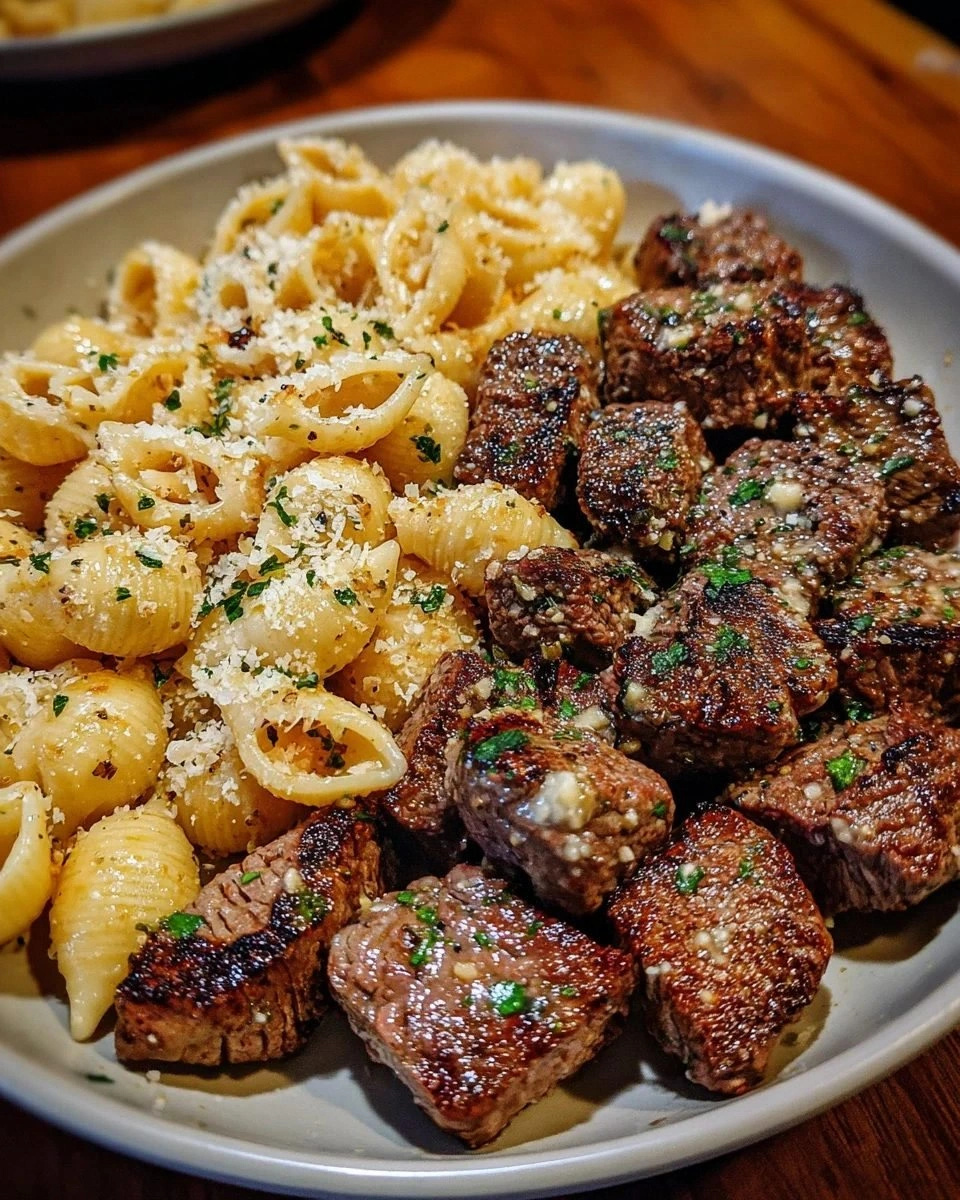
I was standing in my kitchen on a rainy Tuesday, staring at a half‑cooked steak that looked more like a sad, rubbery slab than the juicy masterpiece I’d promised my friends on the group chat. The smoke alarm had already filed a formal complaint, and the only thing louder than the hiss of the pan was the inner voice daring me to keep going. I thought, “If I can’t turn this disaster into a triumph, at least I can turn it into a story I’ll brag about forever.” That moment of panic turned into a culinary epiphany: what if I could take those stubborn steak bites, coat them in a buttery garlic bath, and marry them with pasta shells that soak up sauce like a sponge at a water park? That’s exactly what happened, and trust me, the result was nothing short of a flavor explosion that made my kitchen smell like a five‑star steakhouse on a Saturday night.
Picture the scene: the sizzle of butter and garlic hitting a scorching pan, a caramelized perfume that wraps around the room like a warm blanket, the faint crackle of herbs releasing their essential oils, and the creamy, cheesy aroma of Parmesan melting into a silky sauce that clings to each shell like a lover’s embrace. The steak bites develop a caramelized crust that shatters under your fork with the crispness of thin ice, while the interior stays pink, buttery, and impossibly tender. Meanwhile, the pasta shells—perfectly al dente—are drenched in a sauce so velvety it feels like you’re eating clouds flavored with dairy and garlic. The whole dish hits you with a symphony of textures: the crunch, the melt, the creaminess, all balanced by a subtle herbaceous whisper.
Most recipes out there either over‑cook the steak, drown the pasta in a watery sauce, or forget the crucial finishing touch of fresh parsley that adds a pop of color and brightness. This version, however, respects each component. I use a high‑heat sear to lock in juices, finish the steak in a garlic butter bath that never dries out, and create a Parmesan‑rich cream that clings to the shells without turning greasy. The secret? A splash of pasta cooking water at the end, which emulsifies the sauce and gives it that glossy, restaurant‑quality sheen. It’s the kind of detail that most home cooks skip, but it makes all the difference between “good” and “mind‑blowing.”
And here’s the kicker: I’m going to reveal a technique that most chefs keep under their aprons—a quick deglaze with a splash of white wine that lifts the fond (the caramelized bits stuck to the pan) and incorporates them into the sauce. That little step adds depth you didn’t even know you were missing. I dare you to taste this and not go back for seconds. Okay, ready for the game‑changer? Let me walk you through every single step — by the end, you’ll wonder how you ever made it any other way.
What Makes This Version Stand Out
- Flavor Explosion: The garlic‑butter base creates a fragrant, savory foundation that penetrates every bite, while the Parmesan cream adds a luxurious richness that coats the pasta like velvet.
- Texture Harmony: You get a crisp, caramelized edge on the steak bites that shatters like thin ice, contrasted with the silky, creamy sauce that clings to each shell.
- Simplicity Meets Sophistication: Only ten ingredients, but each is treated with a technique that elevates the dish to restaurant‑level without a lot of fuss.
- Ingredient Quality: Using a tender cut like ribeye or sirloin ensures juicy bites, and fresh Parmesan guarantees melt‑in‑your‑mouth goodness.
- Crowd‑Pleaser Factor: I’ve served this at dinner parties and watched guests fight over the last bite—hands down the best version you’ll ever make at home.
- Make‑Ahead Potential: The sauce can be pre‑made and reheated with a splash of water, while the steak bites stay perfectly tender if you keep them warm.
- Seasonal Flexibility: Whether it’s a chilly winter night or a sunny summer evening, the dish feels just right—comforting yet elegant.
- Visual Appeal: The golden‑brown steak bites speckled with fresh herbs and the glossy, cheese‑laden shells make for a plate that looks as good as it tastes.
Inside the Ingredient List
The Flavor Base
Garlic is the undisputed hero here. Freshly minced garlic releases allicin, a compound that gives that unmistakable pungent aroma that instantly makes your mouth water. If you skip fresh garlic and reach for powder, you’ll lose that bright, sharp edge and end up with a flat flavor profile. A good rule of thumb: use four cloves for a pound of steak; you can always add more if you’re a garlic fanatic. Pro tip: smash the cloves with the flat side of a knife before mincing—this releases more oils and gives you a deeper flavor.
Unsalted butter is the silky conduit that carries the garlic into the steak and pasta. Because it’s unsalted, you have full control over the seasoning, preventing an accidental over‑salt situation. When the butter melts, it creates a glossy, luxurious coating that clings to the steak bites, turning them into little golden nuggets of joy. If you only have salted butter, just cut back on the added salt later in the recipe. The key is to let the butter brown slightly, achieving a nutty, toasty note without burning.
The Texture Crew
Choosing the right cut of steak is non‑negotiable. Sirloin offers a balance of flavor and tenderness, while ribeye adds marbling that melts into the meat, giving it a buttery mouthfeel. When you cut the steak into bite‑size cubes, you increase the surface area, allowing more of that garlic‑butter sauce to cling to each piece. Skipping this step and cooking a whole steak will give you a great main, but you’ll lose the delightful bite‑size crunch that makes this dish so addictive.
Pasta shells are the unsung heroes of this recipe. Their concave shape acts like a tiny bowl, scooping up the creamy sauce in every nook. If you substitute with a different shape, you’ll miss that perfect sauce‑to‑pasta ratio. For gluten‑free diners, a corn‑based shell works just as well, but be mindful of cooking times to avoid mushiness.
The Unexpected Star
Heavy cream is the velvet rope that keeps the sauce from becoming a watery mess. Its high fat content emulsifies with the Parmesan, creating a sauce that coats the shells like a silk scarf. If you’re watching calories, you can swap half‑and‑half, but expect a thinner consistency and a slightly less luxurious mouthfeel. The trick is to add the cream off‑heat, allowing it to thicken without curdling.
Grated Parmesan cheese isn’t just a garnish; it’s the flavor anchor. Freshly grated cheese melts quickly, releasing umami and a subtle nuttiness that ties the whole dish together. Pre‑grated cheese often contains anti‑caking agents that prevent smooth melting, resulting in a grainy texture. So, if you can, buy a block and grate it yourself—your taste buds will thank you.
The Final Flourish
Fresh parsley may seem like a garnish, but it adds a pop of color and a bright, herbaceous finish that cuts through the richness. A handful of chopped parsley tossed in at the end lifts the dish, preventing it from feeling heavy. If parsley isn’t your thing, a sprinkle of chives or a dash of lemon zest can provide a similar freshening effect.
Olive oil is the silent workhorse that prevents the steak from sticking to the pan while adding a subtle fruitiness. Use a high‑smoke‑point oil like light olive oil or grapeseed if you’re searing at very high temperatures. Salt and pepper are the classic seasoning duo; they enhance the natural flavors of the steak and pasta, ensuring each bite is perfectly balanced. Remember, seasoning is an ongoing process—taste and adjust as you go.
Everything's prepped? Good. Let’s get into the real action...
The Method — Step by Step
Start by patting the steak dry with paper towels; moisture is the enemy of a good sear. Cut the steak into uniform 1‑inch cubes, then toss them with a generous pinch of salt, pepper, and the dried thyme and rosemary. Let the seasoned bites rest for five minutes—this dry‑brine draws out moisture and intensifies flavor. While they rest, bring a large pot of salted water to a rolling boil for the pasta.
Heat a heavy‑bottomed skillet over medium‑high heat and add the olive oil. When the oil shimmers, drop the steak cubes in a single layer, making sure not to overcrowd the pan. You’ll hear an immediate sizzle that signals a proper sear. Cook without moving for about 2‑3 minutes until the edges turn a deep mahogany, then flip and sear the other side for another 2 minutes. The goal is a caramelized crust while the interior stays pink.
Once the steak bites are beautifully browned, remove them with a slotted spoon and set aside on a warm plate. Deglaze the pan with a splash (about ¼ cup) of dry white wine, scraping up the browned bits (fond) with a wooden spoon. The wine will sizzle, reduce, and add a bright acidity that balances the butter later. Let it reduce by half, which should take about a minute.
Lower the heat to medium and add the unsalted butter, letting it melt and turn slightly amber. Immediately stir in the minced garlic, watching it turn fragrant in about 30 seconds—be careful not to let it burn, or you’ll get a bitter bite. This is the moment of truth: the butter, garlic, and wine should meld into a glossy, aromatic pool that smells like a dream.
While the garlic is perfuming the butter, add the pasta shells to the boiling water. Cook them al dente—usually 9‑11 minutes, depending on the brand. Reserve about one cup of the starchy cooking water before draining; this liquid is liquid gold for emulsifying the sauce later.
Return the steak bites to the skillet, then pour in the heavy cream, stirring gently. Let the cream come to a gentle simmer—do not boil, or it will separate. Sprinkle in the grated Parmesan cheese, stirring until it melts into a smooth, glossy sauce. If the sauce looks too thick, add a splash of the reserved pasta water until you reach a silky consistency that coats the back of a spoon.
Drain the pasta, then add it directly to the skillet, tossing everything together so each shell is enveloped in the buttery, cheesy sauce. Toss in the fresh parsley at the very end for a burst of color and freshness. Taste and adjust seasoning with a pinch more salt or pepper if needed. Let the dish rest for two minutes; this allows the flavors to meld and the sauce to thicken slightly.
Plate the dish by spooning a generous mound of creamy shells onto each plate, then scatter the garlic‑butter steak bites on top. Finish with an extra drizzle of melted butter if you’re feeling indulgent, and perhaps a final sprinkle of Parmesan. Serve immediately while the sauce is still glossy and the steak bites are still warm. That sizzle when it hits the pan? Absolute perfection.
Insider Tricks for Flawless Results
The Temperature Rule Nobody Follows
Never cook steak bites on low heat; you’ll end up with boiled meat instead of a caramelized crust. A scorching pan (around 400°F) creates the Maillard reaction that gives you those crunchy edges. If you’re unsure, sprinkle a few drops of water onto the pan; they should dance and evaporate instantly. One time a friend tried a “gentle simmer” and ended up with bland, rubbery pieces—let’s just say the party was less enthusiastic about that one.
Why Your Nose Knows Best
Your sense of smell is the ultimate doneness gauge. When the garlic turns a light golden and the butter starts to brown, you’ll notice a nutty aroma that signals it’s time to add the steak back. If the scent turns sharp or burnt, lower the heat immediately. Trusting your nose prevents the dreaded bitter garlic flavor that can ruin an otherwise perfect dish.
The 5‑Minute Rest That Changes Everything
After searing, let the steak bites rest for five minutes before returning them to the sauce. This short pause lets the juices redistribute, ensuring each bite stays moist. Skipping this step is a common mistake that leads to a dry, flavor‑less bite. I once served a rushed version at a dinner party, and the feedback was “steak was a bit tough”—lesson learned.
Pasta Water Magic
Never underestimate the power of starchy pasta water. Adding a ladleful to the sauce at the end creates an emulsion that binds the cream and cheese together, giving you that glossy, restaurant‑style finish. If the sauce looks too thick, add water a tablespoon at a time until you achieve the perfect silkiness. This trick is what separates a good sauce from a great one.
Parmesan Timing
Grate the Parmesan right before you need it and add it off the heat. This prevents the cheese from clumping and ensures it melts into a smooth, velvety texture. If you add it too early, it can turn grainy; too late, and it won’t integrate fully. A quick tip: use a microplane for the finest grate—your sauce will thank you.
Creative Twists and Variations
This recipe is a playground. Here are some of my favorite ways to switch things up:
Mushroom Medley
Swap half the steak bites for sliced cremini and shiitake mushrooms. Their earthy flavor pairs beautifully with the garlic butter, and they add a juicy, umami punch that vegetarians will love.
Spicy Southwest
Add a teaspoon of chipotle powder to the herb blend and finish the dish with a squeeze of lime and chopped cilantro. The smoky heat balances the richness, turning the dish into a fiesta on a plate.
Herb‑Infused Cream
Stir in a tablespoon of pesto (basil or sun‑dried tomato) into the cream before adding Parmesan. This adds a fresh herbaceous layer and a vibrant green hue that makes the plate pop.
Cheese Lover’s Dream
Combine Parmesan with grated Gruyère and a splash of Gorgonzola for a complex, tangy cheese profile. The extra depth is perfect for a special occasion when you want to wow guests.
Low‑Carb Swap
Replace the pasta shells with spiralized zucchini or shirataki noodles. The creamy sauce clings just as well, and you’ll get a lighter, lower‑carb version that still satisfies the cravings.
Storing and Bringing It Back to Life
Fridge Storage
Allow the dish to cool to room temperature, then transfer it to an airtight container. It will keep for up to three days. When reheating, add a splash of milk or water and gently stir over low heat to revive the sauce’s silkiness.
Freezer Friendly
Separate the steak bites and the pasta sauce before freezing. Store each component in its own freezer‑safe bag for up to two months. To reheat, thaw overnight in the fridge, then gently reheat the sauce, add the steak, and combine with freshly cooked shells.
Best Reheating Method
The secret to a perfect reheated bite is steam. Place the leftovers in a skillet with a tablespoon of water or broth, cover, and heat over medium‑low for five minutes. The steam will bring the sauce back to life without drying out the steak. Add a tiny splash of water before reheating — it steams back to perfection.