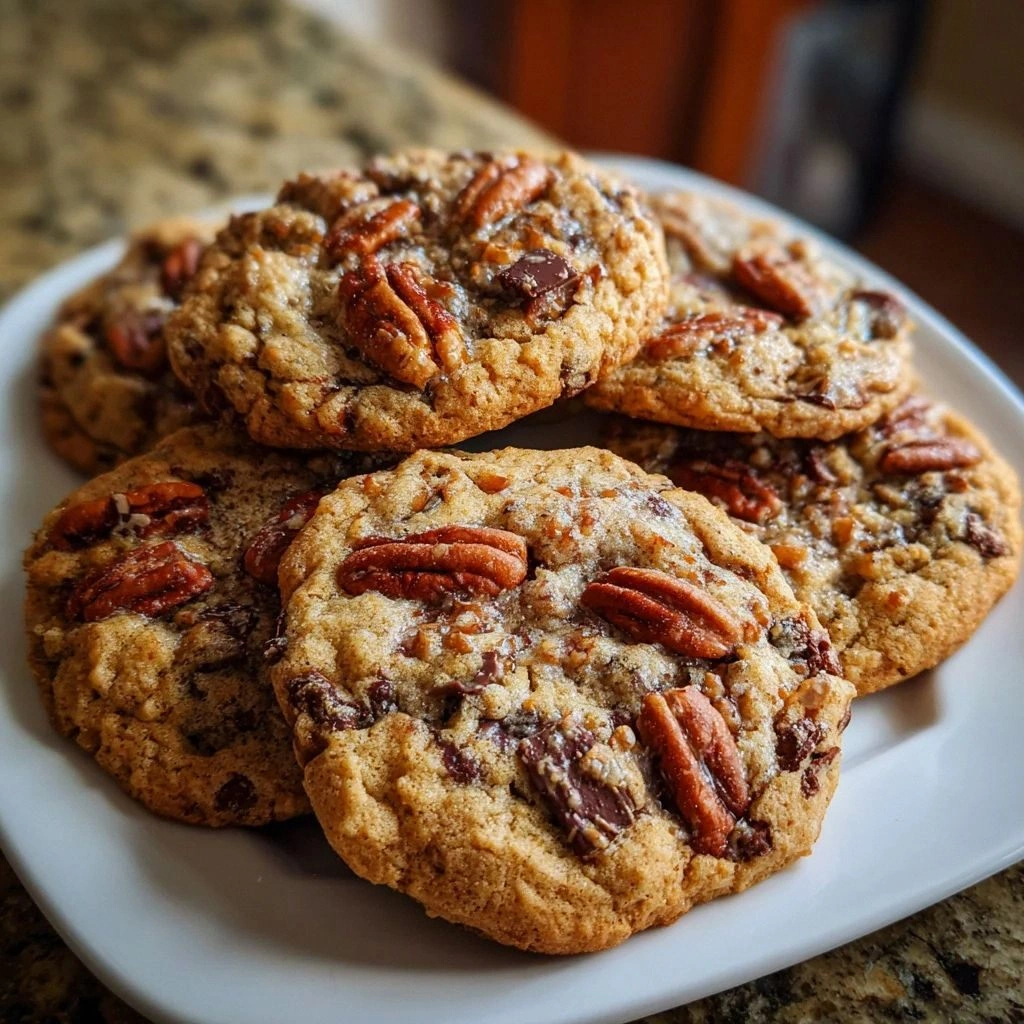
I burned down half my kitchen trying to make chocolate chip cookies. Not even kidding. One minute I was browning butter, the next I was Googling "how to get smoke smell out of curtains" while my smoke detector performed an operatic solo. But here's the beautiful, cookie-scented twist: that kitchen catastrophe led me to the single most addictive cookie I've ever cranked out of my oven. These brown butter bourbon pecan chocolate chunk cookies aren't just cookies; they're tiny, chewy revelations that will ruin every other cookie for you forever. Picture this: deep caramel notes from butter that's danced right up to the edge of burnt, toasted pecans that snap like autumn leaves, pockets of molten chocolate that stretch like taffy, and a whisper of bourbon that makes your taste buds sit up and beg for more. The first time I pulled a tray of these beauties from the oven, my neighbor materialized at my door like some sort of dessert-seeking missile. I hadn't even Instagrammed them yet. The aroma alone is a neighborhood-wide invitation to drop whatever you're doing and come running.
Most recipes get this completely wrong. They treat brown butter like a trendy afterthought, toss in sad, raw nuts, and drown everything in vanilla to cover up their mistakes. Not here. We're going to coax every last drop of flavor from those butter solids, toast our pecans until they smell like vacation, and balance the bourbon so it reads like a secret rather than a frat party. The result? Cookies with crispy, lacquered edges that shatter like thin ice, giving way to centers so soft and chewy they feel like they're still baking on your tongue. I'll be honest — I ate half the batch before anyone else got to try it. My excuse? Quality control. My actual reason? These things are impossible to resist when they're still warm and the chocolate hasn't quite set.
Okay, ready for the game-changer? We’re using two kinds of sugar, but not for the reason you think. Dark brown sugar brings the molasses swagger, while granulated sugar creates those Instagram-worthy crackly tops. And the bourbon? It's not just for show. Alcohol is a flavor carrier, which means it ferries all those nutty, caramelly, chocolatey notes straight to your brain's happy place. Plus, a tablespoon of bourbon keeps the centers softer for days — assuming they last that long. If you've ever struggled with cookies that spread into sad, greasy puddles or emerge from the oven like cakey hockey pucks, you're not alone — and I've got the fix.
Stay with me here — this is worth it. We're about to brown butter like pros, bloom vanilla in bourbon, and fold in chocolate chunks so big they create rivers of molten cocoa that pool into glossy puddles on your parchment paper. Picture yourself pulling this out of the oven, the whole kitchen smelling like a bourbon-soaked candy factory, your phone buzzing with texts from friends who somehow know you've just baked something life-changing. Let me walk you through every single step — by the end, you'll wonder how you ever made it any other way.
What Makes This Version Stand Out
Butter Brilliance: We brown every last gram until it smells like hazelnuts and toffee had a baby. Most recipes stop at "golden," but we push to chestnut-colored specks that taste like liquid caramel. This isn't just melted butter; it's butter transformed into a flavor bomb that makes ordinary cookies taste like they went to finishing school.
Pecan Perfection: Raw nuts are a rookie move. We toss pecans in a slick of brown butter and toast until they crackle and pop, releasing oils that smell like maple syrup and campfire. The result? Nuts that stay crunchy even after three days in an airtight jar — though good luck keeping them around that long.
Bourbon Balance: A full tablespoon of good Kentucky bourbon adds depth without turning your cookie into a shot glass. It bakes off, leaving behind vanilla, oak, and caramel notes that make people ask, "What's that amazing flavor?" It's the culinary equivalent of a secret handshake.
Chocolate Strategy: We use chunks, not chips. Chips are formulated to hold their shape; chunks melt into dramatic pools that stay soft and fudgy even after the cookies cool. Buy a couple of good bars and chop them yourself — your future self will thank you when you pull apart a cookie and see those Instagram-worthy chocolate waterfalls.
Texture Wizardry: Crispy edges, gooey centers, and that satisfying chew that makes you close your eyes involuntarily. We achieve this by using more brown sugar than white, resting the dough, and pulling the cookies when they still look slightly underbaked in the center — because carryover heat is real, and nobody likes a sandy cookie.
Crowd Psychology: I dare you to taste this and not go back for seconds. I've watched self-proclaimed "not a dessert person" devour three in under five minutes. These cookies have powers; plan accordingly.
Inside the Ingredient List
The Flavor Base
Brown butter is the soul of this cookie, and making it is half art, half meditation. Start with unsalted butter — salted butter foams more, making it harder to judge color. Cut it into even pieces so it melts uniformly, then swirl, don't stir, with a silicone spatula. The water will sputter first, then the foam will subside, and finally you'll see the milk solids turn from pale gold to chestnut brown. Pull it off the heat when it smells like someone melted Werther's Originals in a cast-iron pan; it continues cooking in the residual heat. Cool it to just warm before adding to your dough — hot butter will scramble your eggs and melt your chocolate into streaky chaos.
Dark brown sugar isn't just sweet; it's flavor in crystallized form. The molasses content (about 6.5%) brings deep caramel notes and keeps the centers soft for days. If you only have light brown sugar, you can fake it by adding a tablespoon of molasses to a cup of light brown, but honestly, buy the dark stuff. Your cookies will taste like they aged in oak barrels.
The Texture Crew
All-purpose flour gets a bad rap in cookie circles, but it's the workhorse that gives these cookies structure without toughness. Spoon and level it — scooping directly from the bag can add up to 25% more flour, turning your cookies into doorstops. For extra insurance, whisk it first to aerate, then measure. The protein content (usually 10-12%) is perfect for balancing chew and tenderness.
Baking soda and baking powder are the dynamic duo of lift. Soda neutralizes the acidity in brown sugar and helps with browning; powder gives a little extra puff so the cookies don't bake up like frisbees. Make sure both are fresh — if your baking soda has been open since the last presidential administration, toss it.
The Unexpected Star
Bourbon is the plot twist no one sees coming. Use something you'd actually drink; cheap bourbon tastes like regret and artificial vanilla. A mid-shelf Kentucky straight bourbon (think Buffalo Trace or Four Roses) adds notes of caramel, vanilla, and oak that bloom in the oven. If you're baking for kids or avoiding alcohol, swap in apple cider — you'll lose some complexity but gain a cozy, autumnal note.
Ground cinnamon is the whisper that makes people ask, "What's that?" It's not enough to register as "cinnamon cookie," just a warmth that rounds out the bourbon and makes the chocolate taste more chocolatey. Think of it as the culinary equivalent of a bass line — you don't notice it until it's gone.
The Final Flourish
Flaky sea salt on top isn't optional; it's the exclamation point. Maldon is the gold standard — those pyramid-shaped crystals crunch like tiny snowflakes and dissolve into bright pops of salinity that make the sweet notes sing louder. Sprinkle from high above so the crystals drift down like culinary confetti.
Everything's prepped? Good. Let's get into the real action...
The Method — Step by Step
- Start by browning your butter in a light-colored saucepan over medium heat. Light-colored is crucial — you need to see the color change. Swirl occasionally; don't walk away. First it will foam, then sputter, then quiet down. When you see chestnut-colored flecks and smell nutty caramel, pull it off the heat immediately. Pour into a heatproof bowl and chill until opaque but still soft, about 45 minutes. This step concentrates flavor and prevents greasy cookies.
- While the butter cools, toast your pecans. Roughly chop them, then toss with a teaspoon of the cooled brown butter and a pinch of salt. Spread on a sheet pan and bake at 350°F for 8-10 minutes, shaking halfway through. They should smell like maple syrup and look one shade darker. Cool completely; warm nuts will melt your chocolate into streaks.
- In a medium bowl, whisk together flour, salt, cinnamon, baking soda, and baking powder. This distributes the leaveners evenly so you don't get one cookie that tastes like a salt lick and another that could double as a balloon. Set aside so the flour can fully hydrate when it hits the wet ingredients.
- In the bowl of a stand mixer fitted with the paddle attachment (or a large bowl with a hand mixer), beat the cooled brown butter, dark brown sugar, and granulated sugar on medium for 3 full minutes. This isn't a suggestion — creaming properly incorporates air that gives you lift later. The mixture should look like wet sand that's been sunbathing.
- Add the eggs one at a time, beating for 30 seconds after each. This creates an emulsion that traps air and water, giving you chewy centers. Scrape down the bowl religiously; unmixed pockets of butter will bake into greasy craters. Mix in the vanilla and bourbon — the batter will look slightly curdled, which is exactly what you want.
- Reduce speed to low and add the dry ingredients in three additions. Mix just until the last streak of flour disappears. Overmixing develops gluten, and gluten is the enemy of tender cookies. When in doubt, finish mixing by hand with a spatula — your biceps will thank you.
- Fold in the toasted pecans and chocolate chunks with a sturdy spatula. Use a figure-eight motion to distribute without crushing the nuts. The dough will be soft and slightly shiny. At this point, it needs a nap. Cover tightly and refrigerate for at least 2 hours, preferably overnight. This hydrates the flour and lets the flavors meld into something transcendent.
- When you're ready to bake, preheat the oven to 350°F with a rack in the middle. Line two sheet pans with parchment. Use a medium cookie scoop or two spoons to portion 2-tablespoon mounds, spacing them 2 inches apart. They will spread, but not excessively. For bakery-style cragginess, press a few extra chocolate chunks and pecan pieces on top.
- Bake one sheet at a time for 12-14 minutes, rotating halfway through. The edges should be golden brown and set, but the centers will look slightly underbaked — that's your insurance policy for soft, chewy middles. Pull them out and immediately bang the pan on the counter once. This deflates them slightly and gives those Instagrammable ripples. Sprinkle with flaky sea salt while they're still hot so it adheres.
- Let cool on the pan for 5 minutes; they finish baking from residual heat. Transfer to a wire rack to cool completely, or just burn your mouth like the rest of us. Store in an airtight container at room temperature for up to 5 days, though I've never seen them last past day two.
That's it — you did it. But hold on, I've got a few more tricks that'll take this to another level...
Insider Tricks for Flawless Results
The Temperature Rule Nobody Follows
Cookie dough temperature is the difference between bakery-perfect and sad, flat Frisbees. After chilling, let the dough sit at room temp for 10-15 minutes before scooping — cold dough doesn't spread enough, leading to doughy centers. Conversely, if your kitchen is sweltering, pop the scooped mounds back in the fridge for 10 minutes while the oven preheats. A friend tried skipping this step once; let's just say her cookies could've doubled as poker chips.
Why Your Nose Knows Best
Trust your senses over the timer. When the edges smell like caramel and the centers still look a shade too pale, pull them. That carryover heat is real — cookies continue baking on the hot sheet for another 2-3 minutes. If you wait until they look "done," they'll cool into hockey pucks. Your nose will tell you when the Maillard reaction has worked its magic.
The 5-Minute Rest That Changes Everything
After mixing, let the dough rest for 5 minutes before chilling. This gives the flour time to hydrate fully, which means less spreading and more chew. It's the culinary equivalent of letting red wine breathe — a tiny pause that pays massive dividends in texture. Skip it and your cookies will spread like gossip at a family reunion.
Creative Twists and Variations
This recipe is a playground. Here are some of my favorite ways to switch things up:
Smoky Maple Bacon Edition
Swap the bourbon for maple syrup and fold in ½ cup of candied bacon bits. The maple brings autumnal sweetness, while the smoky bacon plays off the pecans like a country duet. Use applewood-smoked bacon for the best balance — hickory can overpower the chocolate.
Spicy Mexican Hot Chocolate
Add ½ teaspoon cayenne and ½ teaspoon espresso powder to the dry ingredients. Use 70% dark chocolate chunks and finish with a dusting of cinnamon sugar. The heat builds slowly, making these the perfect adult milk-and-cookies experience.
Salted Caramel Swirl
Dollop ½ cup of thick caramel sauce over the dough before chilling, then marble it in with a knife. The caramel bakes into sticky pockets that stretch like taffy when you pull the cookies apart. Use a caramel that's been cooked to 235°F so it stays soft, not crunchy.
Coconut Rum Vacation
Sub coconut rum for the bourbon and swap half the pecans for toasted coconut flakes. The rum's tropical notes make these taste like a cookie version of a beach bar — minus the sand in your shoes. Bonus: they mail beautifully to friends stuck in winter.
Double Down Chocolate
Replace ¼ cup flour with cocoa powder and use white chocolate chunks instead of dark. The result is a brooding, almost black cookie with creamy white pockets — a visual and flavor contrast that makes people do a double-take. It's like an Oreo went to finishing school.
Breakfast Bourbon Bonanza
Add ½ cup crushed cornflakes and 2 tablespoons of ground coffee to the dough. The cornflakes stay crispy, giving you little bursts of buttery crunch, while the coffee amplifies the bourbon notes. Serve with cold milk and pretend it's a balanced breakfast.
Storing and Bringing It Back to Life
Fridge Storage
Store cooled cookies in an airtight container with a slice of sandwich bread. The bread acts like a moisture sponge, keeping the cookies soft for up to 5 days. Replace the bread every other day — it will harden as it gives up moisture. If they do stale, pop one in the microwave for 8 seconds with a damp paper towel; it steams back to almost-baked freshness.
Freezer Friendly
Scoop the dough onto a parchment-lined sheet, freeze until solid, then transfer to a zip-top bag. They'll keep for 3 months and bake straight from frozen — just add 2 extra minutes to the timer. For baked cookies, layer them between parchment in a rigid container to prevent breakage. Thaw at room temp for 15 minutes or give them a 5-minute ride in a 300°F oven to revive the edges.
Best Reheating Method
Revive day-old cookies by placing them on a sheet pan in a 300°F oven for 5 minutes. The low heat re-crisp the edges without over-baking the centers. For a single cookie, use a toaster oven set to toast-medium. Pro move: add a tiny splash of water to the hot pan before closing the door — the steam rehydrates the centers while the dry heat crisps the edges. It's like a cookie spa day.