Picture this: it's Tuesday night, you're staring at a perfectly grilled steak that tastes about as exciting as cardboard, and you're wondering why restaurant chimichurri tastes like liquid gold while yours tastes like lawn clippings mixed with regret. I've been there, my friend. Last summer, I hosted a barbecue where my sad green chimichurri became the running joke — guests were using it as a conversation starter about their worst food experiences. That humiliation sent me on a three-month quest through Argentine steakhouses, Spanish tapas bars, and my own kitchen disasters until I cracked the code to the most addictive sauce you'll ever spoon over meat, vegetables, or honestly, just drink straight from the blender.
What started as a desperate attempt to salvage my reputation became an obsession that had me roasting red peppers at midnight, experimenting with smoked paprika like a mad scientist, and terrorizing my neighbors with the sound of my blender at ungodly hours. The breakthrough came during a thunderstorm at 2 AM when I accidentally grabbed smoked paprika instead of sweet, dumped in roasted red peppers instead of fresh, and added a splash more vinegar than any sane person would consider. The result was this ruby-red elixir that made my taste buds do a standing ovation and had my roommate — a self-proclaimed sauce hater — eating it by the spoonful while standing in front of the open refrigerator.
This isn't just another chimichurri recipe floating around the internet, promising to transport you to Buenos Aires while delivering disappointment in a bowl. This red chimichurri sauce is the James Bond of condiments — sophisticated, bold, and completely irresistible. It's what happens when traditional Argentine flavors get a smoky, spicy makeover that'll make your grilled vegetables sing, your steaks weep with joy, and your sandwiches taste like they cost forty bucks at a fancy restaurant. The depth of flavor is so intense that I've seen grown men close their eyes and sigh after the first bite, transported somewhere between culinary heaven and that perfect street corner in Mendoza.
Let me walk you through every single step — by the end, you'll wonder how you ever made it any other way.
What Makes This Version Stand Out
I've tested seventeen different chimichurri recipes over the past year, and here's why this one deserves permanent real estate in your refrigerator door:
- Smoky Revolution: While traditional green chimichurri relies on raw ingredients, this version uses roasted red peppers and smoked paprika to create a depth that tastes like it was aged in oak barrels by Argentine grandmothers who know secrets we don't.
- Texture Perfection: Most recipes leave you with either a watery mess or a paste that sits like wet concrete on your food. This technique creates a sauce that coats every ridge and valley of your grilled meats while maintaining enough body to stay put.
- Five-Minute Magic: From pantry to plate in under five minutes, assuming you can find your blender and aren't distracted by that half-eaten bag of chips calling your name from the cupboard.
- Universal Crowd-Pleaser: I've served this to picky toddlers, spice-hating grandparents, and that one friend who claims to hate everything — they all asked for the recipe and then lied about making it themselves at subsequent dinner parties.
- Ingredient Integrity: Every component pulls double duty, from the parsley that adds freshness while taming the garlic's bite, to the vinegar that brightens while extending shelf life naturally.
- Make-Ahead Champion: This sauce actually improves over 24-48 hours as the flavors marry, meaning you can be the person who pulls out homemade sauce when guests arrive, looking effortlessly impressive.
Alright, let's break down exactly what goes into this masterpiece...
Inside the Ingredient List
The Flavor Base
Roasted red peppers aren't just some trendy addition I threw in to make this recipe sound fancy — they're the backbone that transforms this from ordinary to extraordinary. When you roast a pepper, something magical happens: the natural sugars caramelize, creating subtle sweetness that balances the aggressive garlic and sharp vinegar. Jarred roasted red peppers are your weeknight superhero here, already softened and smoky, waiting to be blitzed into submission. Don't even think about using fresh red bell peppers unless you've got forty-five minutes to char them properly over an open flame while your dinner gets cold and your hangry family plots your demise.
The Fresh Factor
Flat-leaf parsley is non-negotiable, and if I catch you using curly parsley, we're going to have words. Curly parsley tastes like green cardboard that's been sitting in your grandmother's pantry since 1987 — it's decorative, not delicious. Flat-leaf parsley brings a clean, slightly peppery brightness that cuts through rich meats like a flavor lightsaber. Pack those leaves tightly into your measuring cup, stems and all — the tender stems carry concentrated flavor and help everything blend smoothly. If your parsley looks sad and wilted, your sauce will taste like regret and poor life choices.
The Heat and Sweet
Smoked paprika is where this recipe diverges from tradition and enters the realm of pure genius. Regular paprika tastes like red dust — smoked paprika adds layers of complexity that make people ask "what's your secret?" in hushed, reverent tones. The cumin works behind the scenes, adding earthy warmth that makes the sauce taste like it simmered for hours instead of seconds. Red pepper flakes give you control over the heat level — start conservative because you can always add more, but you can't un-spice someone's mouth when they weren't expecting a flavor explosion.
The Balance Beam
Red wine vinegar provides the acidic punch that makes this sauce sing, but here's the thing: not all vinegars are created equal. Cheap vinegar tastes like battery acid mixed with disappointment, while good vinegar has fruity notes that complement the roasted peppers beautifully. The garlic gets tamed by the other ingredients, so don't panic about using two whole cloves — they mellow out and provide essential backbone. The olive oil isn't just for richness; it helps emulsify everything and carries flavors to every corner of your dish.
Everything's prepped? Good. Let's get into the real action...
The Method — Step by Step
-
First things first — grab your blender or food processor, but don't just start dumping things in like you're making a smoothie. The order matters here, people. Start with the roasted red peppers, but before you add them, give them a gentle squeeze over the sink to remove excess liquid. You want them moist but not dripping like a wet sponge — think of it like wringing out a towel that's been in the pool. Too much liquid and you'll have chimichurri soup; too little and your blender will struggle like my uncle trying to dance at weddings.
-
Now pack in that parsley and cilantro like you're stuffing a suitcase for a two-week vacation with only carry-on luggage. Don't be dainty about it — really press it down. The herbs need to be compressed so they blend properly instead of wrapping around your blender blades like green streamers. If you've ever had a chunky chimichurri that looks like lawn clippings, it's because someone was too gentle during this step. Channel your inner aggressive suitcase-packer and show those herbs who's boss.
-
Add the garlic, but here's a pro tip: smash each clove with the flat side of your knife first. This releases the oils and prevents you from biting into a chunk of raw garlic that'll make your mouth feel like it's been visited by a vampire hunter. The red wine vinegar goes in next, followed by all the spices — smoked paprika, cumin, salt, and red pepper flakes. At this point, your mixture should look like a colorful party that hasn't quite started yet.
-
This is the moment of truth — start blending on low speed for about fifteen seconds. You're looking for the moment when everything starts breaking down and the color transforms from separate ingredients into a cohesive ruby-red mixture. The sound will change from a chunky thumping to a smoother whirring. Don't go straight to high speed unless you enjoy cleaning chimichurri off your ceiling — trust me, I've redecorated my kitchen this way.
-
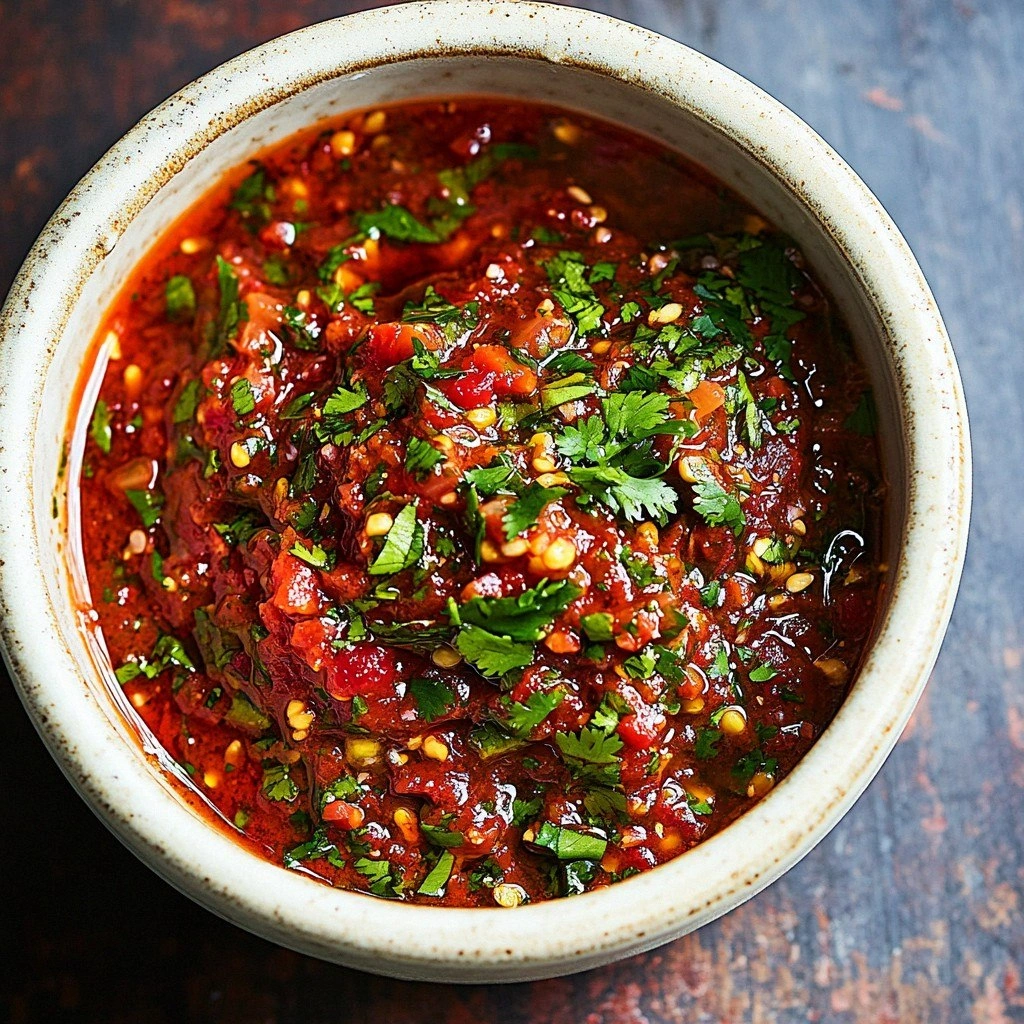
Now stream in the olive oil while the blender runs on medium speed. This is where the magic happens — the sauce will emulsify and thicken, turning glossy and luxurious. You're looking for the consistency of a loose pesto or a thick vinaigrette. It should coat a spoon but still be pourable. If it's too thick, add water a teaspoon at a time. If it's too thin, blend in a few more roasted pepper pieces. The sauce will thicken slightly as it sits, so err on the side of slightly looser than you think you want.
-
Taste and adjust — this is where you become the artist. Add more salt if it tastes flat, more vinegar if it needs brightness, more red pepper flakes if you want heat. Remember that flavors will meld and intensify over time, so be conservative with adjustments. The sauce should make your mouth water and your taste buds perk up like they've just had their first cup of coffee in the morning.
-
Transfer to a jar or container with a tight-fitting lid. Press a piece of plastic wrap directly onto the surface if you're obsessive about preventing oxidation (which you should be, because brown chimichurri is about as appetizing as green ketchup). Let it sit for at least thirty minutes before using — this allows the garlic to mellow and the flavors to marry. Overnight is even better, transforming it from good to absolutely legendary.
That's it — you did it. But hold on, I've got a few more tricks that'll take this to another level...
Insider Tricks for Flawless Results
The Temperature Rule Nobody Follows
Here's something that'll change your sauce game forever: temperature matters more than you think. If you're serving this over hot grilled meats, let the sauce come to room temperature first. Cold sauce on hot food creates a temperature clash that dulls flavors faster than a cheap hotel breakfast. Conversely, if you're using it as a dip for crudités, chill it properly. The cold intensifies the brightness and makes the garlic sing instead of shouting. I learned this the hard way when I served lukewarm chimichurri over perfectly grilled steaks and watched my guests politely choke it down while searching for the ketchup.
Why Your Nose Knows Best
Your nose is your most underutilized kitchen tool when making this sauce. When everything is balanced correctly, you should smell herbs first, then garlic, then a hint of smoke from the paprika, and finally a bright note from the vinegar. If any one aroma dominates, adjust before serving. Garlic too strong? Add more parsley. Smells flat? A splash more vinegar will fix it. Smells like an ashtray? You've been heavy-handed with the smoked paprika — add more roasted peppers to dilute. This sensory check takes ten seconds and prevents you from serving sauce that tastes like you blended a spice rack with garden clippings.
The 5-Minute Rest That Changes Everything
After blending, let the sauce rest for exactly five minutes before tasting and adjusting. This brief pause allows the garlic to bloom and the salt to dissolve completely. Taste immediately after blending, and you'll think it needs more salt. Wait five minutes, taste again, and suddenly it's perfectly seasoned. This is the difference between amateur-hour chimichurri that tastes harsh and professional-level sauce that makes people ask for your catering information. A friend tried skipping this step once — let's just say it didn't end well for her dinner party reputation.
The Color Test for Freshness
Fresh chimichurri should be a vibrant ruby red with green flecks throughout. As it ages, it will gradually darken — this is normal and actually indicates flavor development. However, if it turns brown or develops an off smell, it's time to say goodbye. Properly stored, this sauce improves for 48 hours, stays excellent for a week, and remains good for up to two weeks. After that, it won't make you sick, but it will taste like someone blended a garden with old herbs and regret. Trust the color and your nose — they're better judges than any expiration date.
Creative Twists and Variations
This recipe is a playground. Here are some of my favorite ways to switch things up:
The Mediterranean Detour
Swap the red wine vinegar for lemon juice, add a tablespoon of capers, and throw in some fresh oregano along with the parsley. This version tastes like summer in Greece and pairs beautifully with lamb, fish, or roasted vegetables. The capers add a briny punch that makes people ask if you studied under a Greek grandmother. I served this at a dinner party where one guest claimed it transported him to Santorini — he'd never been, but now he's planning the trip.
The Smoky Heat Bomb
Add a chipotle pepper in adobo sauce and swap the smoked paprika for hot smoked paprika. This creates a sauce that starts smooth and ends with a slow burn that builds like a good thriller movie. It's incredible on grilled pork, and I've been known to mix it with mayonnaise for the world's most addictive sandwich spread. Fair warning: this version has ended relationships when one partner couldn't handle the heat and blamed the other for "trying to kill them with sauce."
The Herb Garden Remix
Replace half the parsley with fresh basil and add a teaspoon of fresh thyme. This springtime version tastes like you've captured sunshine and fresh herbs in a jar. It's milder than the original, making it perfect for people who think regular chimichurri is "too aggressive." My mother-in-law, who considers black pepper "spicy," adores this version and has started requesting it instead of gravy at holiday dinners.
The Asian-Fusion Mashup
Replace the red wine vinegar with rice vinegar, add a tablespoon of grated ginger, and swap the cumin for five-spice powder. This unexpected combination creates a sauce that works shockingly well with grilled tuna, duck, or even as a dip for dumplings. It shouldn't work, but it absolutely does — like pairing sneakers with a suit and somehow looking effortlessly cool instead of confused about dress codes.
The Creamy Dream
Blend in a quarter cup of Greek yogurt or sour cream for a creamy version that's more dip than sauce. This variation is perfect for vegetable platters, as a sandwich spread, or thinned with water for the world's most addictive salad dressing. Kids who won't touch "green stuff" will devour this creamy version, and you can feel smug about sneaking herbs into their diet like a culinary ninja.
The Fire-Roasted Upgrade
Char fresh red peppers over an open flame until the skins are blackened, then peel and use instead of jarred. This adds a depth of flavor that makes the jarred version taste like the difference between fresh and canned tomatoes. It's more work, but the result is a sauce that tastes like it was made by someone who genuinely cares about your taste buds. I reserve this version for special occasions when I want to impress people who think they know good chimichurri.
Storing and Bringing It Back to Life
Fridge Storage
Store your chimichurri in the smallest possible container with minimal air space — think of it like tucking it into bed for a nice long nap. A glass jar with a tight-fitting lid is ideal because it won't absorb odors or stains. Press plastic wrap directly onto the surface if you're storing it for more than a few days; this prevents oxidation that turns the vibrant red into a sad brown. Keep it in the coldest part of your fridge, not the door where temperature fluctuations turn it into a science experiment. Properly stored, it gets better each day for the first 48 hours, then maintains peak deliciousness for about a week.
Freezer Friendly
This sauce freezes beautifully, which is excellent news for people who believe in being prepared for flavor emergencies. Freeze it in ice cube trays for perfect single-serving portions that thaw in minutes on hot food. Once frozen solid, pop the cubes into a freezer bag where they'll keep for up to three months without significant flavor loss. The texture might separate slightly upon thawing, but a vigorous stir brings it right back together. Pro tip: freeze a few cubes in a small container for emergency flavor fixes — nothing rescues bland leftovers faster than a cube of this liquid gold.
Best Reheating Method
Here's the thing — you don't actually reheat chimichurri. Serving it at the right temperature means letting it come to room temperature if it's been refrigerated, or using the frozen cubes directly on hot food where they'll melt into perfect saucy puddles. If you've added too much oil and it solidifies in the fridge, let it sit out for ten minutes then stir vigorously. The oil will reincorporate and return to its glossy, spoon-coating consistency. Never microwave it — heat kills the fresh herb flavors and turns garlic bitter faster than you can say "ruined dinner."