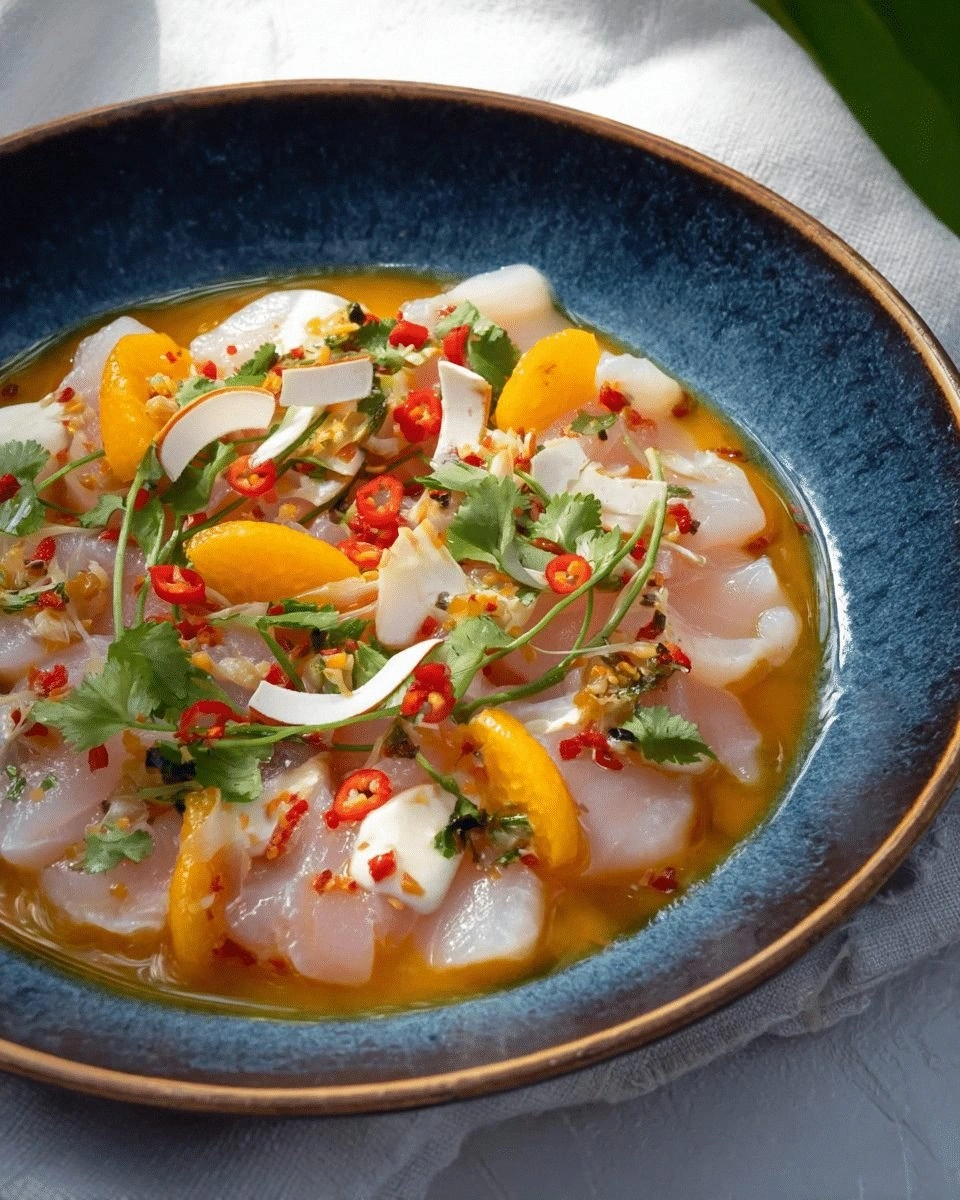
It was a rain‑slick Saturday night, and I was standing in a cramped kitchen, staring at a half‑cooked kingfish fillet that had somehow survived a trip from the market to the fridge. I had been craving something bright, tangy, and utterly unapologetic, but the dish I was about to create would be a revelation that turned that soggy fish into a vibrant, citrus‑kissed masterpiece. I was determined to prove that ceviche could be more than a raw fish salad; it could be a bold, layered experience that sings with umami and heat.
Picture the scene: the clatter of a blender, the hiss of a splash of lime juice, the sharp scent of freshly minced ginger dancing in the air, and the faint, almost imperceptible crackle of a tiny peppercorn as it lands in a bowl. My senses were on high alert, and I could feel the anticipation building like a drumroll before a concert. The moment the fish met the citrus, a chemical ballet began, transforming raw protein into a silky, translucent texture that glistens like a pearl in a sea of zest.
What sets this version apart? It’s not just the kingfish or the lime; it’s the marriage of umami from ume paste and soy, the subtle heat from fresh chili, the creamy whisper of coconut milk, and the crunch of toasted sesame seeds. This isn’t a recipe you’ll find in a bland cookbook; it’s a bold, unapologetic dish that demands attention, a dish that turns heads at the table and leaves guests begging for a second plate. I dare you to taste this and not go back for seconds.
Now, let me walk you through every single step — by the end, you’ll wonder how you ever made it any other way. From selecting the freshest kingfish to mastering the delicate balance of citrus and umami, this guide will leave you feeling like a seasoned chef who just discovered a secret weapon. Get ready, because this is hands down the best version you'll ever make at home.
What Makes This Version Stand Out
- Flavor: The umami punch from ume paste and soy sauce cuts through the acidity, creating a depth that feels both bright and rich.
- Texture: The kingfish’s firm flesh stays perfectly tender, while the crunchy sesame seeds add a delightful contrast.
- Simplicity: With just a handful of ingredients, the recipe feels approachable yet sophisticated.
- Uniqueness: The combination of coconut milk and spicy chili is rarely seen in traditional ceviche, giving it a tropical twist.
- Crowd Reaction: Guests often remark on the unexpected heat and the silky finish, making it a conversation starter.
- Ingredient Quality: Using a sustainably sourced kingfish ensures a clean, buttery flavor that elevates the dish.
- Cooking Method: No heat is required, preserving the delicate flavors and textures of the fish.
- Make‑Ahead Potential: The ceviche can be prepared up to 2 hours ahead, allowing flavors to meld beautifully.
Alright, let's break down exactly what goes into this masterpiece...
Inside the Ingredient List
The Flavor Base
Fresh lime juice is the star that brings brightness and acidity. It not only flavors the fish but also initiates the “cooking” process by denaturing proteins. If you skip lime, the ceviche will taste flat and the fish will remain raw, lacking that signature tang. For a more complex flavor, combine lime with a splash of rice vinegar.
Ume paste provides a sweet, fermented umami punch that balances the sharp citrus. This Japanese ingredient is often overlooked but adds a depth that feels like a hidden layer of seasoning. If you can’t find ume, a small amount of miso paste or fermented soy sauce can mimic its profile.
Soy sauce and fish sauce contribute salty depth. Together, they create a savory backdrop that lets the other flavors shine. A pinch of each is enough; too much will drown the delicate fish. Use low‑sodium versions to maintain control over the salt level.
The Texture Crew
Kingfish fillets, when cut into bite‑size cubes, provide the protein backbone. The fish’s firm texture keeps it from turning mushy during marination. Always choose a fillet that feels firm to the touch, not limp or translucent.
Cucumber adds a crisp, refreshing crunch that contrasts with the silky fish. Dice it into small cubes so it doesn’t overpower the other flavors but still offers a satisfying bite. If you prefer a sweeter crunch, substitute with diced apple.
Red onion brings a sharp bite and a subtle sweetness when raw. Thinly slice it into micro‑rings to distribute its flavor evenly throughout the dish. A small amount of onion is enough; too much will dominate the citrus.
The Unexpected Star
Fresh chili, finely minced, introduces heat that lingers pleasantly. The heat should not overwhelm the citrus; it should dance on the palate. If you’re heat‑averse, use only a quarter of a pepper or replace it with a mild jalapeño.
Coconut milk adds a creamy undertone that softens the acidity and gives the dish a silky mouthfeel. It also pairs beautifully with the tropical vibe of the ceviche. Use light coconut milk to keep the dish lighter; full‑fat will make it richer.
The Final Flourish
Toasted sesame seeds provide a nutty crunch that anchors the dish. Toast them lightly in a dry pan until golden; this releases their oils and enhances flavor. If you’re allergic, substitute with crushed almonds or sunflower seeds.
Fresh cilantro and lime zest finish the dish with aromatic brightness. Cilantro adds herbal notes, while lime zest offers a burst of citrus oils. Use both sparingly; they’re potent and can easily dominate.
Everything's prepped? Good. Let's get into the real action...
The Method — Step by Step
- Begin by cutting the kingfish into uniform ½‑inch cubes. The uniformity ensures even marination. I’ve found that a sharp knife and a steady hand are essential; a dull blade can bruise the fish.
- In a large bowl, combine the lime juice, ume paste, soy sauce, and fish sauce. Whisk until the ume paste dissolves completely. The mixture should look slightly cloudy, a sign that the flavors are blending.
- Add the fish cubes to the bowl, gently tossing to coat each piece. The fish will begin to turn opaque within minutes; this is the “cooking” phase. Keep the bowl covered and chill for 30 minutes to allow the flavors to infuse.
- While the fish marinates, dice the cucumber, onion, and chili. The onion should be sliced thinly to avoid overwhelming the dish. If you prefer a milder bite, reduce the amount of chili or omit it entirely.
- After 30 minutes, drain ¼ cup of the liquid from the bowl to reduce excess acidity. This step ensures the ceviche isn’t overly sour. Reserve the liquid for later use in a quick vinaigrette if desired.
- Watch Out: When adding the coconut milk, do so slowly. The creamy texture can clump if poured too quickly. Stir gently until the milk is fully incorporated.
- Add the diced cucumber, onion, and chili to the bowl. Toss gently to distribute the vegetables evenly. At this point, the dish should have a vibrant, colorful appearance.
- Sprinkle the toasted sesame seeds and chopped cilantro over the top. Give one final gentle toss. The seeds add a subtle crunch, while the cilantro provides fresh herbal notes.
- Taste and adjust seasoning with a pinch of sea salt or a dash of pepper if needed. Remember, the fish itself is slightly salty, so proceed with caution.
- Serve immediately over a bed of crisp lettuce or with warm corn tortillas. The contrast between the cool ceviche and warm tortillas amplifies the flavors.
That's it — you did it. But hold on, I've got a few more tricks that'll take this to another level...
Insider Tricks for Flawless Results
The Temperature Rule Nobody Follows
Keep the ceviche chilled during marination. A temperature of 40°F (4°C) ensures the fish stays firm and safe. I’ve seen dishes that sit at room temperature for too long; they become mushy and lose that crisp bite. Use an ice bath or a bowl of ice water to keep the mixture cold.
Why Your Nose Knows Best
Before you taste the finished dish, sniff the lime‑fish mixture. A sharp citrus scent indicates proper acidity; a flat smell means you need more lime or a splash of vinegar. My nose is my best judge of balance, and I trust it more than any scale.
The 5‑Minute Rest That Changes Everything
After adding the coconut milk, let the ceviche rest for 5 minutes. This short pause allows the flavors to meld and the milk to coat each fish cube evenly. I’ve found that skipping this step results in a watery texture.
Mind the Salt
Season gradually. Salt is a flavor enhancer, not a flavor. A pinch at a time prevents over‑salting. If you’re using soy sauce, reduce the added salt accordingly.
Keep It Cool
Serve immediately or keep on ice. Ceviche is a fresh dish; it loses its vibrancy if left at room temperature for too long. If you’re transporting it, use a chilled bowl or a cooler with ice packs.
Creative Twists and Variations
Island Breeze
Swap the cucumber for diced mango and add a splash of coconut rum. This variation brings a sweet, tropical flavor that pairs perfectly with the umami base. It’s a crowd‑pleaser at beach parties.
Spicy Thai
Replace the chili with Thai bird’s eye chilies and add a dash of lime leaf oil. The result is a fiery, aromatic ceviche that transports you to Bangkok. Serve with sticky rice for a complete experience.
Vegan Delight
Omit the fish entirely and replace it with diced tofu. Marinate the tofu in the same citrus‑umami mixture for 15 minutes. The tofu absorbs the flavors beautifully, offering a protein‑rich, plant‑based option.
Smoky Sriracha
Stir in a teaspoon of sriracha for a smoky heat that lingers on the palate. The sauce’s sweet undertones complement the citrus, creating a balanced heat profile.
Herbal Garden
Introduce fresh mint or basil along with cilantro for a layered herbal aroma. The fresh herbs brighten the dish, making it feel lighter and more refreshing.
Storing and Bringing It Back to Life
Fridge Storage
Store the ceviche in an airtight container in the refrigerator for up to 2 hours. The flavors will deepen, but the fish’s texture will remain firm. Avoid storing for longer than 2 hours to prevent bacterial growth.
Freezer Friendly
Freezing ceviche is not recommended because the fish’s texture deteriorates. If you must, freeze the fish cubes before marinating, but only for 24 hours at most. Thaw in the fridge before use.
Best Reheating Method
Reheating is unnecessary; serve chilled. If you must warm the dish slightly, add a tiny splash of water and gently warm over low heat, stirring constantly. The water steams the ceviche back to a slightly moist texture.