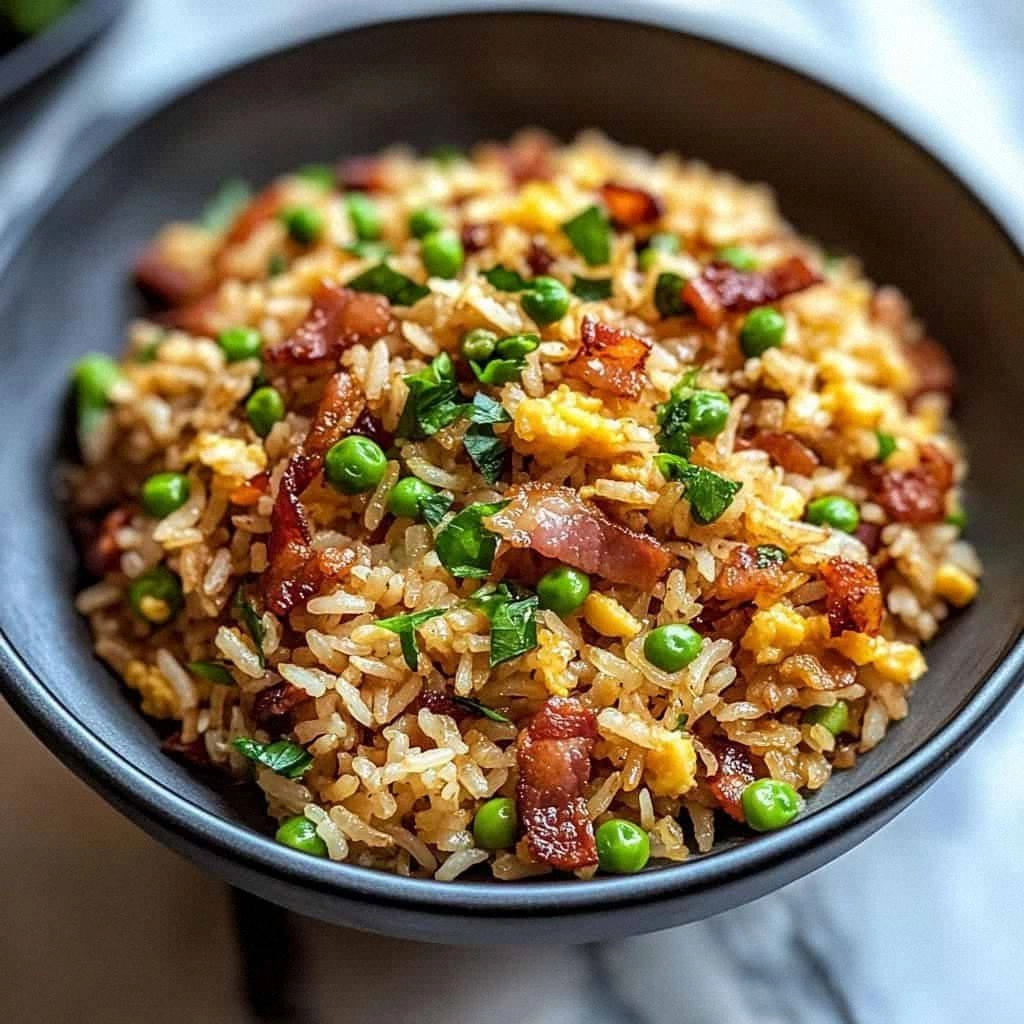
Let me tell you about the night I accidentally created the most addictive bacon fried rice on the planet. It was 2:47 AM, I was wearing mismatched socks and a hoodie covered in flour from an earlier baking disaster, and my stomach was growling louder than my neighbor's neglected beagle. The fridge held nothing but a container of day-old rice, some questionable vegetables, and a pack of bacon that was calling my name like a siren song. Thirty minutes later, I was standing over my stove, shoveling steaming hot rice into my mouth with a plastic spoon because all my real utensils were in the dishwasher, thinking I'd stumbled upon something magical. That first bite? Pure chaos in the best possible way — smoky, salty, with little crispy bits that crackled between my teeth like edible fireworks.
Here's the thing about most fried rice recipes floating around the internet: they're lying to you. They tell you to use freshly cooked rice (soggy disaster), or to add the bacon at the end (where's the flavor?), or worse — they skip the bacon entirely and expect you to be satisfied with some sad vegetable medley. If you've ever wondered why your homemade fried rice tastes like disappointment with a side of mush, you're not alone. I've been there, staring at a pan of grayish rice that looked like it had given up on life, wondering where it all went wrong. The truth is, great fried rice isn't about following a basic recipe; it's about understanding the beautiful dance between heat, timing, and the glorious transformation of simple ingredients into something that makes grown adults fight over the last spoonful.
What makes this bacon fried rice different from every other version out there? We're talking about rice grains that maintain their individuality while being coated in a glossy sheen of bacon fat and seasonings. Each grain should be able to stand alone, like introverts at a party who secretly want to be there. The bacon isn't just an add-on here — it's the foundation, the backbone, the reason you'll be making this once a week for the rest of your life. I'm talking about rendering that pork candy until it's crispy around the edges but still has a little chew, then using that liquid gold to flavor everything else in the pan. This isn't just dinner; this is therapy you can eat with chopsticks.
Picture this: it's Sunday night, you're in your favorite worn-out T-shirt, and the whole house smells like someone opened a breakfast diner in your kitchen. The bacon sizzles and pops, sending little grease fireworks into the air. Your roommate wanders in, sniffing the air like a bloodhound, asking what time dinner's ready. You tell them thirty minutes, but we both know you'll be eating in fifteen because patience is for people who haven't smelled bacon cooking. Let me walk you through every single step — by the end, you'll wonder how you ever made it any other way.
What Makes This Version Stand Out
This isn't just another fried rice recipe that'll get lost in the sea of mediocre internet cooking advice. This is the version that'll ruin takeout for you forever, the one that makes your friends ask if you've been secretly taking cooking classes, the recipe that becomes your signature dish whether you like it or not. I know these are bold claims, but I've watched too many people have religious experiences over this rice to be modest about it.
- Bacon-First Philosophy: Instead of treating bacon like a garnish, we build the entire dish around it, rendering every last bit of fat to create a smoky foundation that seasons everything it touches. The rice literally bathes in bacon essence, absorbing flavors that would make a vegetarian weep.
- Day-Old Rice Perfection: While others might tell you fresh rice works fine (it doesn't), we embrace the slightly dried texture of yesterday's grains, which transform into individual pearls that dance rather than clump. Each grain gets its moment to shine, coated in glossy bacon fat and seasonings.
- The Three-Zone Heat Method: Most recipes treat fried rice like it's all the same temperature, but we're working with hot, medium, and finishing zones that create layers of texture. This means crispy bits where you want them, tender vegetables that still have bite, and eggs that are silky rather than rubbery.
- Umami Bomb Technique: By combining soy sauce with oyster sauce and a touch of sugar, we create a flavor profile that's deeper than your ex's emotional baggage. It's not just salty — it's complex, mysterious, addictive.
- The Egg Integration Secret: Instead of scrambling eggs separately like some kind of amateur, we create little pockets of egg that cling to the rice, giving you protein in every bite without any dry, overcooked chunks.
- Make-Ahead Miracle: This rice actually tastes better the next day, which means you can prep it on Sunday and have lunch that makes your coworkers jealous all week. Try getting that kind of ROI from your other recipes.
- Customizable Crowd-Pleaser: Whether you're feeding picky kids, hungry teenagers, or that friend who claims they "don't like leftovers," this recipe adapts to please everyone while maintaining its soul.
- One-Pan Wonder: Everything happens in a single large pan, which means fewer dishes and more time to enjoy the fruits of your labor. Because nothing kills the joy of cooking like facing a mountain of cleanup.
Alright, let's break down exactly what goes into this masterpiece...
Inside the Ingredient List
Understanding your ingredients is like knowing which friends to invite to a party — each one brings something unique to the table, and when they all get along, magic happens. This isn't about being precious or foodie-elitist; it's about knowing why each component matters so you can make smart substitutions when your pantry looks like a grocery store after an apocalypse.
The Flavor Base
Thick-cut bacon isn't just a suggestion here — it's the entire foundation of flavor we're building. Those meaty strips render down into pure liquid gold that'll make your kitchen smell like you've died and gone to breakfast heaven. When you're standing at the meat counter, don't reach for that thin, sad bacon that looks like it could disappear in a strong wind. You want the stuff that has heft, that looks like it has stories to tell, the kind that'll give you something to chew on while you're cooking. Dice it small, about the size of your thumbnail, because we want maximum surface area for rendering and maximum crispy edges for textural contrast.
The onion isn't just here to bulk things up — it's your aromatic foundation that'll melt down and disappear into the background, leaving behind a sweetness that balances all that salty bacon goodness. Go for a yellow onion if you want reliable results, but if you're feeling fancy, a sweet Vidalia will take this to dessert-level deliciousness. The key is chopping it fine enough that it cooks quickly but not so small that it burns before the bacon fat renders properly.
Garlic and ginger are the dynamic duo of Asian cooking, and skipping either one is like trying to clap with one hand — technically possible but deeply unsatisfying. Fresh garlic gives you that punchy, savory backbone, while ginger adds brightness and a subtle heat that makes everything taste more alive. Don't even think about using that pre-minced jarred garlic that's been sitting in your fridge since the Bush administration. Fresh cloves, smashed and minced, release oils that'll make your kitchen smell like you know what you're doing.
The Texture Crew
Carrots bring more than just color to this party — they're your textural counterpoint to all that soft rice and crispy bacon. Dice them small, about the same size as your bacon pieces, so they cook quickly and evenly. Nobody wants to bite into a hard chunk of carrot when they're expecting tender perfection. If you're using those baby carrots that come in a bag, nobody's judging you, but real carrots taste like actual food instead of orange water.
Celery might seem like an odd addition, but it's your secret weapon for that restaurant-quality complexity. It adds a vegetal bitterness and crunch that prevents the whole dish from becoming a one-note bacon bomb. Plus, it's probably wilting in your crisper drawer right now, begging to be used before it becomes compost. The leaves are edible too — chop them up and add them with the green onions for an extra herbal punch.
Day-old rice is the hill I'll die on, and if you've been using fresh rice, we need to have a serious conversation about your life choices. Fresh rice has too much moisture, which means you'll end up with a mushy, gummy mess that tastes like sadness. Day-old rice from the fridge has dried out slightly, which means each grain can fry individually and develop those coveted crispy edges. If you only have fresh rice, spread it on a baking sheet and pop it in the freezer for 30 minutes — it's not cheating, it's being resourceful.
The Unexpected Star
Frozen peas and corn aren't just filler vegetables — they're little bursts of sweetness that pop in your mouth and keep the dish from being too heavy. The frozen part is crucial because it means they were picked at peak ripeness and flash-frozen, unlike those sad fresh peas that have been sitting in the produce section since Tuesday. Don't thaw them first; they'll defrost quickly in the hot pan and help cool down the rice so it doesn't overcook.
Oyster sauce is the ingredient that makes people say "I don't know what you put in here, but I can't stop eating it." It's thick, syrupy, and packed with umami that makes soy sauce taste like salt water in comparison. If you're allergic to shellfish or just philosophically opposed to oysters, you can skip it, but you'll be missing that mysterious depth that makes restaurant fried rice so addictive. A little goes a long way — too much and your rice will taste like the ocean floor.
The Final Flourish
Sesame oil is your finishing move, the thing that makes everyone at the table go "mmmm" when you drizzle it on at the end. It loses its punch when cooked, which is why we add it off-heat, letting its nutty aroma perfume the whole dish. Don't use toasted sesame oil for cooking — that's like using truffle oil to grease a pan. Save the good stuff for the final flourish where you can actually taste it.
White pepper might seem like an unnecessary specialty ingredient, but it's what gives authentic fried rice that subtle heat that blooms in your throat rather than slapping you in the face like black pepper. It's milder, more floral, and won't leave black specks in your rice that make it look like it's been sitting out too long. If you only have black pepper, use half the amount and add it earlier in the cooking process so it has time to mellow.
Everything's prepped? Good. Let's get into the real action...
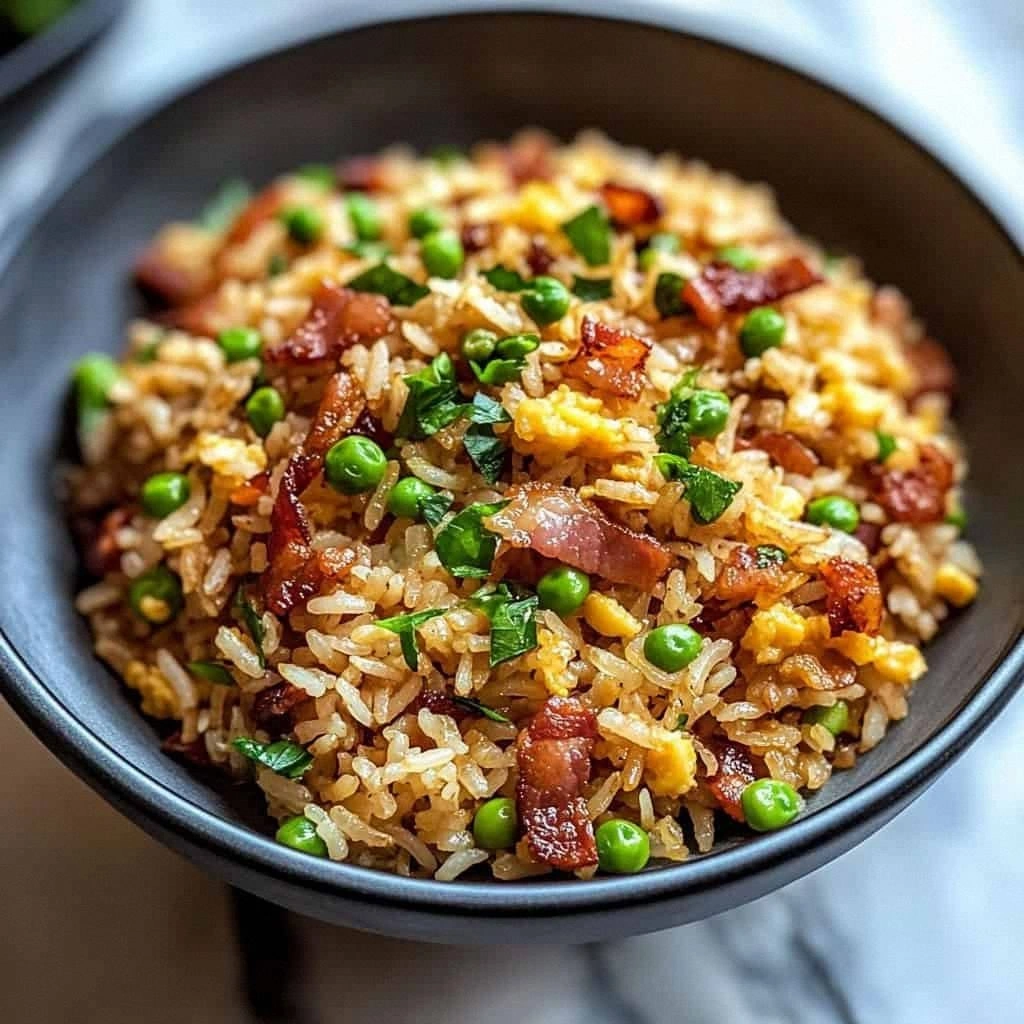
The Method — Step by Step
- Render the Bacon Gold: Start with your largest skillet or wok over medium heat — not high, because we're not trying to cremate anything here. Add the diced bacon and spread it out in a single layer, then walk away for about three minutes. Let it do its thing, rendering slowly and filling your kitchen with that smell that makes vegetarians question their life choices. When the edges start to curl and turn golden, give it a stir and continue cooking until most of the fat has melted and the bacon bits are crispy but not burnt. This should take about 8-10 minutes total, and if you're not tempted to eat half of it straight from the pan, you're stronger than I am.
- The Great Bacon Removal: Using a slotted spoon, transfer the bacon to a paper towel-lined plate, leaving behind every precious drop of fat in the pan. This is liquid gold, the foundation of flavor that'll make your rice taste like it came from a restaurant where the chefs yell at each other in Cantonese. You should have about 3-4 tablespoons of fat in the pan — if you're short because your bacon was lean, add a splash of vegetable oil. If you've got more than 4 tablespoons, pour some off or your rice will swim instead of fry.
- Aromatics Go In: Crank the heat up to medium-high and let the pan get hot — you want to hear that satisfying sizzle when the onions hit the fat. Add your chopped onion and stir-fry for about 2 minutes, until the edges start to turn translucent and the kitchen smells like you're doing something illegal. Throw in the carrots and celery, continuing to stir-fry for another 3-4 minutes. The vegetables should still have some bite — we're not making baby food here. Listen for that staccato tapping sound of vegetables hitting hot metal; that's the sound of success.
- Garlic and Ginger Time: Clear a little space in the center of your pan by pushing the vegetables to the sides, creating a bare spot where you can see the bottom. Add the minced garlic and grated ginger to this hot zone and let them sizzle for about 30 seconds, just until fragrant. This prevents them from burning in the hot fat while still releasing all their aromatic oils. Once you smell that distinctive perfume, mix everything together and let it party for another minute. Your kitchen should smell like you know what you're doing even if you're making this up as you go.
- The Rice Revolution: Okay, ready for the game-changer? Add your day-old rice, breaking up any clumps with your hands as you drop it in. Don't be delicate here — rice can handle rough treatment. Use your spatula to really press the rice into the pan, creating maximum contact with the hot surface. Let it sit undisturbed for about 2 minutes, then flip and press again. We're creating those coveted crispy bits that make restaurant fried rice so addictive. Keep flipping and pressing for about 5-6 minutes total, until individual grains are starting to separate and dance around the pan like they've got places to be.
- Vegetable Confetti: Scatter your frozen peas and corn over the rice and give everything a good toss. The cold vegetables will help cool down the pan slightly, preventing the rice from burning while adding pops of color that make this look like you tried harder than you did. Stir-fry for about 2 minutes, until the vegetables are heated through and the rice has taken on a slightly drier texture. If your rice is still looking steamy and sad, keep going — we want each grain to be its own entity, not a mushy mass.
- The Egg Integration: Push all the rice to one side of the pan, creating a bare spot that should sizzle when you add a tiny drop of water. Crack your eggs into this hot zone and let them sit for about 10 seconds, then scramble them gently with your spatula. The key is to not overcook them — you want them just set but still glossy. Once they're mostly cooked, fold them into the rice, creating little pockets of egg throughout rather than big chunks. This technique ensures every bite has some protein without any dry, rubbery egg disasters.
- Seasoning Symphony: In a small bowl, whisk together the soy sauce, oyster sauce, sugar, and white pepper. Drizzle this mixture over the rice, resisting the urge to dump it all in one spot. We want to paint the rice with flavor, not drown it in a salty tsunami. Start with about three-quarters of the sauce, toss everything together, then taste and add more if needed. Remember, you can always add more seasoning but you can't take it away — unless you're cooking for someone you don't like very much.
- The Bacon Homecoming: Return those beautiful bacon bits to the pan, letting them reunite with their rendered fat that's been flavoring everything. Add the sesame oil and give everything one final toss, making sure the bacon is distributed throughout rather than clumped in one corner. Let it all heat together for about a minute, just until everything is singing in harmony. The bacon should still have some crunch to contrast with the tender rice.
- Final Flourish: Off the heat, scatter the sliced green onions over the top and give everything one last gentle fold. The residual heat will wilt the onions slightly while keeping their bright color and fresh flavor. Serve immediately, preferably straight from the pan while it's still steaming and the aromas are doing their seductive dance through your kitchen. If you're feeling fancy, you can transfer it to a serving bowl, but honestly, standing over the stove with a spoon is the authentic experience.
That's it — you did it. But hold on, I've got a few more tricks that'll take this to another level...
Insider Tricks for Flawless Results
The Temperature Rule Nobody Follows
Here's where most home cooks go wrong: they treat fried rice like it's a delicate soufflé instead of the high-heat, fast-action dish it's meant to be. Your pan should be hot enough that a drop of water dances and evaporates immediately, but not so hot that your oil is smoking like a chimney. This sweet spot — what I call "aggressively medium-high" — is where the magic happens. Too cool and your rice steams into mush; too hot and everything burns before it has time to develop flavor. The best test? Your rice should sizzle when it hits the pan, not just sit there looking depressed.
Why Your Nose Knows Best
I'll be honest — I ate half the batch before anyone else got to try it, and my excuse was "quality control." But here's the real secret: your nose is the best kitchen timer you have. When the garlic and ginger hit the pan, count to 30 and wait for that unmistakable aroma that makes your mouth water involuntarily. When the rice starts to fry, you should smell something toasty and nutty, like popcorn's sophisticated cousin. If you're not smelling anything, your heat's too low. If you're smelling smoke, you've gone too far. Trust your nose more than your timer — it's been evolving for this exact moment.
The 5-Minute Rest That Changes Everything
Picture yourself pulling this out of the oven, the whole kitchen smelling incredible, and you're tempted to dive right in. Don't. Let it rest for exactly five minutes — not ten, not two, but five. This isn't some chef-y nonsense; it's science. The rice needs time to absorb the flavors evenly, the bacon bits need a moment to re-crisp slightly, and you need a second to appreciate what you've just created. Plus, molten rice straight from the pan will burn your tongue and ruin the experience. A friend tried skipping this step once — let's just say it didn't end well for their taste buds or their pride.
The Wok Flip That Impresses Everyone
You don't need a wok to make great fried rice, but if you've got one, this is your time to shine. The flip — that wrist-flicking motion that sends rice skyward and catches it again — isn't just for show (though it is impressive). It ensures even cooking by exposing all the rice to the hot surface, prevents sticking by keeping things moving, and honestly, it's just fun. Start small, with just a little rice, and work your way up. Worst case scenario, you get to explain why there's rice in your light fixtures. Best case, you look like you know what you're doing even if you learned everything from YouTube.
The Leftover Transformation Trick
Most recipes get this completely wrong. They tell you to just reheat leftovers in the microwave, which turns your beautiful fried rice into a sad, steaming pile of disappointment. Here's what actually works: spread your leftover rice in a single layer on a baking sheet and pop it under the broiler for 3-4 minutes. The direct heat re-crisps the bacon, revives the texture, and brings back that just-cooked magic. Then hit it with a tiny splash of soy sauce and sesame oil to wake up the flavors. It's like CPR for your leftovers, bringing them back from the dead better than ever.
Creative Twists and Variations
This recipe is a playground. Here are some of my favorite ways to switch things up:
The Breakfast of Champions
Add a fried egg on top with a runny yolk that breaks and creates a silky sauce over everything. Throw in some diced breakfast sausage with the bacon, and swap the green onions for chives. Suddenly you've got breakfast that'll make you excited to wake up on Monday morning. I dare you to taste this and not go back for seconds — especially when that golden yolk mixes with the bacon fat and creates something that should probably be illegal.
The Hawaiian Luau Version
Substitute half the bacon with diced Spam (trust me on this one) and add a cup of diced pineapple in the last two minutes of cooking. The sweet-salty combination will transport you straight to a beach where your only worry is whether to have another mai tai. Use macadamia nuts instead of peanuts for garnish, and if you're feeling particularly festive, serve it in a hollowed-out pineapple because sometimes presentation matters.
The Heat Seeker's Dream
Keep the bacon but add a tablespoon of gochujang to your sauce mixture, and throw in some diced fresh chilies with the vegetables. The fermented Korean chili paste adds depth and heat that builds slowly rather than slapping you immediately. Top with kimchi for a Korean fusion that'll clear your sinuses and warm your soul. This version pairs excellently with cold beer and regret.
The Surf and Turf Special
Reduce the bacon to half and add half a pound of small shrimp, added in the last 3 minutes of cooking. The sweetness of the shrimp plays beautifully against the smoky bacon, and you'll feel like you're eating something that costs thirty dollars at a restaurant. Just make sure your shrimp are peeled and deveined — nothing kills the mood like biting into shrimp shell.
The Veggie-Forward Approach
Keep the bacon (because we're not monsters) but load up on vegetables — bell peppers, broccoli florets, snap peas, whatever's lurking in your crisper drawer. Add them in stages based on their cooking times: carrots and broccoli first, snap peas and bell peppers later. You'll end up with a rainbow of vegetables that makes this feel almost healthy, which means you can justify having that second helping.
The Low-Carb Lie
Replace half the rice with cauliflower rice for a version that tricks you into thinking you're being virtuous. The texture is different but still satisfying, and the bacon ensures it doesn't taste like punishment. This works best when you're trying to impress someone who talks about their macros, but still want to enjoy dinner. Just don't tell the bacon it's being used in a "healthy" recipe — it might get offended.
Storing and Bringing It Back to Life
Fridge Storage
Let your rice cool completely before storing — hot rice in a sealed container creates a bacteria paradise that'll have you praying to the porcelain gods later. Pack it in airtight containers, pressing plastic wrap directly against the surface to prevent it from drying out. It'll keep for up to four days, though honestly, it's never lasted that long in my house. If you see any fuzzy spots or it smells off, don't try to be a hero — rice is cheap, food poisoning is expensive.
Freezer Friendly
Portion your cooled rice into freezer bags, pressing out as much air as possible. Lay them flat to freeze — they'll stack like edible playing cards and thaw much faster than hockey pucks. Frozen fried rice keeps for up to three months, though the texture of the vegetables might get a little sad. When you're ready to eat, thaw overnight in the fridge or for those of us who plan ahead like a goldfish, microwave on defrost for 3-4 minutes before the regular reheating process.
Best Reheating Method
Add a tiny splash of water before reheating — it steams back to perfection. Microwave works in a pinch, but the stovetop is your friend here. Heat a dry pan over medium heat, add your rice, and drizzle with a teaspoon of water per cup of rice. Cover with a lid for 2 minutes to steam, then remove the lid and let it fry for another 2-3 minutes to recapture that just-cooked texture. Finish with a fresh drizzle of sesame oil and maybe some new green onions because you're worth the extra thirty seconds of effort.