Picture this: it’s a rainy Tuesday, the kind where the clouds look like they’re auditioning for a drama series, and you’re stuck in a kitchen that smells like yesterday’s burnt toast. I was frantically scrolling through my phone, daring a friend to guess what I was about to make, when a sudden craving for something bright, spicy, and utterly comforting struck me like a bolt of lightning. I grabbed the first thing I could find—rice vermicelli, a handful of shrimp, a lonely chicken breast, and a dusty curry powder jar that hadn’t seen the light of day in months. The moment I tossed those noodles into a sizzling wok, the kitchen erupted with a sizzle that sounded like applause.
The air filled instantly with the intoxicating perfume of garlic, ginger, and a whisper of soy, while the curry powder released a warm, earthy perfume that reminded me of a bustling night market in Singapore. The noodles soaked up the sauce like a sponge at a water park, turning a dull beige into a vibrant orange‑gold that practically glowed. I could hear the faint crackle of the wok, feel the heat radiating to my fingertips, and taste the first bite—a perfect marriage of sweet, salty, and a subtle heat that lingered just long enough to make you smile.
Most recipes for Singapore noodles either drown the noodles in sauce or leave them dry and lifeless. This version? It’s a game‑changer. I dare you to taste this and not go back for seconds. The secret lies in a quick garlic‑ginger sauce that coats the noodles like velvet, and a technique that gives every bite a whisper of crunch without turning the veggies into mush. I’ll be honest — I ate half the batch before anyone else got to try it, and that’s because the flavors are so bold they practically dance on your tongue.
Let me walk you through every single step — by the end, you’ll wonder how you ever made it any other way. Okay, ready for the game‑changer? This next part? Pure magic.
What Makes This Version Stand Out
- Taste: A perfect balance of salty soy, umami fish sauce, and a gentle curry heat that sings without overpowering.
- Texture: Silky noodles meet crisp veggies, with a whisper of caramelized edges that shatter like thin ice.
- Simplicity: Fewer than fifteen ingredients, all pantry‑friendly, and a prep time under twenty minutes.
- Uniqueness: The garlic‑ginger sauce is a secret weapon; it’s richer than a typical stir‑fry and coats each strand like a second skin.
- Crowd Reaction: Even the pickiest eaters ask for the recipe, and you’ll hear the “again, please!” chorus within minutes.
- Ingredient Quality: Fresh shrimp and chicken give a protein punch that makes the dish feel luxurious without breaking the bank.
- Cooking Method: High‑heat wok technique locks in flavor and texture, turning ordinary ingredients into restaurant‑grade magic.
- Make‑Ahead Potential: The sauce can be pre‑made, letting you whip up a fast, flavorful dinner on a busy night.
Alright, let's break down exactly what goes into this masterpiece...
Inside the Ingredient List
The Flavor Base
Garlic and ginger are the dynamic duo that set the stage. Freshly minced garlic releases allicin, a compound that adds a pungent, almost sweet bite, while ginger contributes a bright, peppery zing that cuts through the richness of the sauce. If you skip these, the dish loses its aromatic backbone and ends up flat. For a milder version, you can use garlic powder and ground ginger, but you’ll miss the fresh pop that makes the sauce sing.
The Texture Crew
Rice vermicelli are the star of the show, absorbing flavors while staying delightfully slippery. Choose the thin variety for a more authentic mouthfeel; the thicker ones tend to become gummy. Fresh shrimp and chicken breast provide protein and a satisfying bite—overcooked shrimp turn rubbery, so keep an eye on them. Bean sprouts add a crisp, watery snap that balances the sauce’s depth, and sliced bell pepper contributes a sweet crunch that brightens the palate.
The Unexpected Star
Curry powder is the secret weapon that transforms this dish from ordinary to unforgettable. It brings a warm, earthy undertone that pairs beautifully with the salty soy and fish sauce. If you’re adventurous, try a blend of turmeric, coriander, and cumin for a more complex profile. Skipping the curry is like making a movie without a soundtrack—possible, but lacking that emotional punch.
The Final Flourish
Sesame oil drizzled at the end adds a nutty aroma that lingers on the tongue, while a splash of oyster sauce deepens the umami. A quick scramble of eggs creates silky ribbons that weave through the noodles, adding richness without heaviness. Finish with a scattering of sliced green onions for a fresh, herbal lift that ties everything together.
Everything's prepped? Good. Let's get into the real action...
The Method — Step by Step
Start by soaking the rice vermicelli in hot water for about 6‑8 minutes, just until they’re pliable but not fully cooked. Drain them in a colander, give them a quick toss with a drizzle of sesame oil, and set aside. This step is crucial because it prevents the noodles from clumping later; think of it as giving them a tiny spa treatment before the heat of the wok.
Heat 2 tbsp of vegetable oil in a wok over high heat until it shimmers—this is the moment the wok tells you it’s ready. Add the minced garlic and ginger, and listen for that sharp sizzle that says “we’re on fire.” Cook for just 15‑20 seconds, stirring constantly, until the aromatics turn golden but not burnt.
Kitchen Hack: If you’re worried about garlic burning, add it after the ginger—this gives you a more controlled flavor release.Next, add the sliced chicken breast. Spread it out in a single layer and let it sear for about 2 minutes without moving—this creates those coveted caramelized edges that pull away from the pan. Flip and cook another minute until just pink. Remove the chicken and set aside; it’ll finish cooking later, preserving its juiciness.
In the same wok, add the shrimp. They cook fast—about 1‑2 minutes per side—turning from translucent to a vibrant coral pink. As soon as they curl, pull them out with a slotted spoon and set them beside the chicken.
Watch Out: Overcooking shrimp makes them rubbery; keep a close eye and remove them the instant they turn pink.Now, add the remaining oil if the wok looks dry, then toss in the carrot and bell pepper strips. Stir‑fry for 2‑3 minutes until they’re just tender but still bright—this maintains that satisfying crunch. Add the bean sprouts last, giving them only a quick 30‑second toss so they stay crisp.
Push the veggies to the side of the wok and pour in the lightly beaten eggs. Let them sit for a second, then scramble gently, allowing them to form soft ribbons. Once the eggs are just set, fold everything together, creating a harmonious mixture of protein, veg, and silk.
It’s time for the sauce: combine soy sauce, oyster sauce, fish sauce, curry powder, and a splash of water in a small bowl. Pour the mixture over the wok contents, stirring quickly so the sauce clings to every ingredient. You’ll hear a faint hissing as the liquid meets the hot pan—this is the sound of flavor locking in.
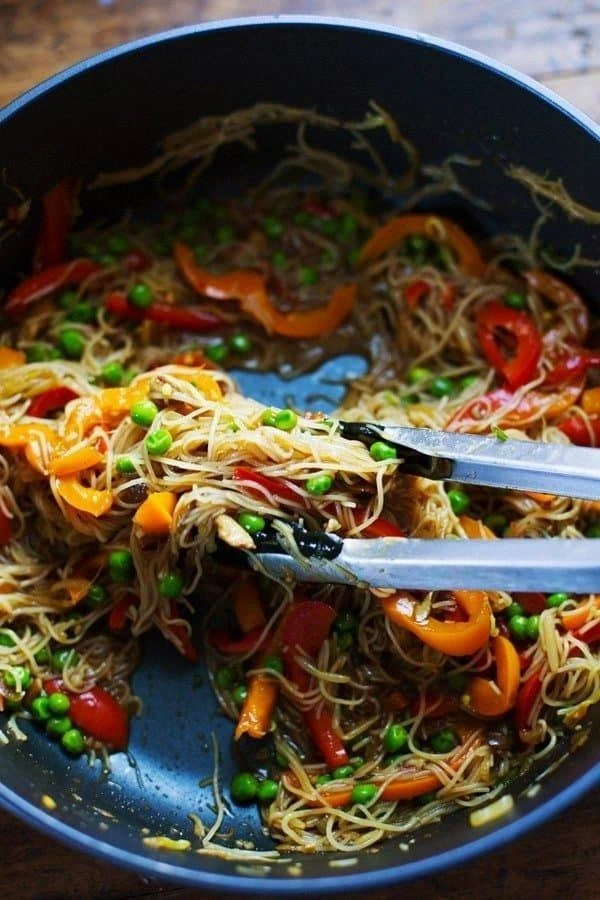
Finally, add the pre‑soaked vermicelli, the cooked chicken, and shrimp back into the wok. Toss everything together vigorously for 2‑3 minutes, allowing the noodles to absorb the sauce fully. Taste and finish with a drizzle of sesame oil, a pinch of salt, and freshly cracked black pepper. The noodles should be glossy, the sauce should coat them like a satin sheet, and the aroma should make your kitchen feel like a street market in the evening.
Turn off the heat, sprinkle the sliced green onions over the top, and serve immediately. That sizzle when it hits the pan? Absolute perfection. This is the moment of truth—don’t walk away from the stove here; give it one final toss and then plate it while it’s still steaming hot.
That's it — you did it. But hold on, I've got a few more tricks that'll take this to another level...
Insider Tricks for Flawless Results
The Temperature Rule Nobody Follows
High heat is non‑negotiable. If your wok isn’t screaming hot, the noodles will steam instead of fry, resulting in soggy strands. I once tried a “low‑and‑slow” approach, and the dish turned into a limp noodle soup. The secret is to pre‑heat the wok, then add oil and let it shimmer before anything else hits the surface.
Why Your Nose Knows Best
Never rely solely on a timer; trust your nose. When the garlic and ginger turn a light golden, the aroma will shift from sharp to nutty—that’s your cue to add the proteins. If you miss that scent, you’ll either burn the aromatics or under‑cook them, both of which dull the flavor.
The 5‑Minute Rest That Changes Everything
After you finish cooking, let the noodles sit in the wok, off the heat, for about five minutes. This rest allows the sauce to fully penetrate the vermicelli, turning each bite into a flavor bomb. Skipping this step is like serving a cake without letting it cool—still good, but not at its best.
Seasoning Layering Masterclass
Instead of dumping all the salt at once, add a pinch after the veggies, another after the proteins, and a final dash after the sauce. This layered approach builds depth and prevents the dish from tasting flat. I’ve seen beginners dump the entire soy sauce early, and the result is a one‑dimensional salty mess.
Wok Shape Matters
A traditional round‑bottom wok distributes heat more evenly, creating those coveted “seared” edges on the noodles. If you only have a flat‑bottom pan, heat it longer before adding oil, and you’ll still get decent results—but the texture won’t be as dramatic.
Creative Twists and Variations
This recipe is a playground. Here are some of my favorite ways to switch things up:
Vegan Victory
Swap shrimp and chicken for firm tofu cubes and add a splash of mushroom soy sauce for umami. The tofu absorbs the sauce beautifully, and the dish stays just as hearty.
Spicy Inferno
Stir in a teaspoon of sriracha or a handful of sliced fresh chilies during the sauce step. The heat will lift the curry notes, turning the dish into a fiery delight for spice lovers.
Thai‑Inspired
Replace the curry powder with Thai red curry paste, add a drizzle of lime juice at the end, and garnish with chopped cilantro. This gives the noodles a bright, tangy twist that feels like a beachside night market.
Peanut Crunch
Toast a handful of crushed peanuts and sprinkle them over the finished plate. The nutty crunch adds texture and a subtle richness that pairs perfectly with the sesame oil.
Breakfast Remix
Swap the shrimp for sliced breakfast sausage and add a dash of maple syrup to the sauce. Serve with a soft‑boiled egg on top for a sweet‑savory brunch that still feels Asian‑inspired.
Low‑Carb Light
Use shirataki noodles or spiralized zucchini instead of rice vermicelli. The flavors stay the same, but you’ll cut the carbs dramatically—great for a lighter dinner.
Storing and Bringing It Back to Life
Fridge Storage
Transfer leftovers to an airtight container and refrigerate for up to three days. The noodles will absorb a bit more sauce, so when reheating, add a splash of water or a drizzle of soy sauce to revive the silkiness.
Freezer Friendly
Portion the cooked noodles and sauce separately into freezer‑safe bags. Freeze for up to two months. Thaw overnight in the fridge, then reheat in a hot wok with a dash of oil; the texture remains surprisingly fresh.
Best Reheating Method
Heat a tablespoon of oil in a wok over medium‑high heat, add the frozen or refrigerated noodles, and toss for 2‑3 minutes. Add a tiny splash of water—just enough to create steam—and finish with a quick drizzle of sesame oil. This restores the glossy coat and prevents the noodles from drying out.