Picture this: I’m standing in my cramped kitchen, the timer on the stove is ticking, and a friend just texted, “I dare you to taste this and not go back for seconds.” The air is thick with the scent of garlic and basil, and the sizzling sound of a hot pan is the soundtrack of culinary rebellion. I’ve tried every version of Thai basil beef I could find, yet none could match the punch of fresh herbs and the satisfying snap of rice paper. This isn’t just a dish; it’s a high‑protein, low‑carb revolution that turns a simple stir‑fry into a handheld masterpiece. I’m about to walk you through every single step, and by the end, you’ll wonder how you ever made it any other way.
What Makes This Version Stand Out
- Flavor: The marriage of soy, oyster sauce, and lime creates a savory‑sweet‑tang balance that lingers on the palate like a well‑played melody.
- Texture: The crisp edges of the rice paper contrast with the juicy ground beef, delivering a bite that satisfies both crunch lovers and meat aficionados.
- Protein: With 25 grams per serving, this dish keeps your muscles fed without the bloated carbs of typical Thai wraps.
- Freshness: Fresh basil, mint, and cilantro bring a bright, green punch that elevates the whole meal.
- Ease: Every step is streamlined—no pre‑mixing sauces or complex marinades—so you can whip it up in under an hour.
- Versatility: The recipe is a blank canvas: swap beef for chicken, or add pineapple for a sweet twist.
- Make‑ahead: The rolls keep well in the fridge, making them the ultimate grab‑and‑go lunch for busy days.
- Guest‑approved: At parties, these rolls become the instant crowd‑pleaser, with guests begging for the recipe.
Inside the Ingredient List
The Flavor Base
Garlic and shallot form the aromatic backbone of this dish. They sauté until golden, releasing a nutty, caramelized note that underpins every bite. Skipping them leaves the beef bland and the sauce thin; the depth of flavor would be lost. If you’re avoiding garlic, a pinch of garlic powder can mimic the essence, but fresh cloves give that unmistakable zing.
Ground beef is the protein powerhouse. Using 1.5 pounds of lean beef ensures moisture without excess fat, keeping the rolls light. If you prefer a richer texture, a 70/30 mix will add a buttery finish. When browning, let the meat sear before stirring to develop a caramelized crust that enhances umami.
The Texture Crew
Rice paper wrappers are the vehicle that brings everything together. Their translucent, chewy bite is a staple in Southeast Asian cuisine. Soaking them just long enough—about 10 seconds—prevents tearing while keeping them pliable. For a gluten‑free option, use rice paper made from 100% rice flour.
Julienned carrots or cucumbers add a refreshing crunch that balances the savory beef. They also bring a pop of color that makes the dish visually appealing. If you’re allergic to carrots, zucchini ribbons work well as a substitute. Keep the vegetables crisp by adding them just before rolling.
The Unexpected Star
Thai basil is the star that ties the dish together with its sweet, peppery aroma. Its leaves unfurl when cooked, releasing a burst of fragrance that lingers on the tongue. Fresh mint and cilantro provide complementary herbal notes that cut through the richness of the beef. If you can’t find Thai basil, sweet basil works, though the flavor profile will shift slightly.
The Final Flourish
The dipping sauce—often a mix of hoisin, fish sauce, and lime—creates a glossy, savory coating that brightens each bite. It’s the finishing touch that turns a simple wrap into an explosion of umami. A splash of sesame oil in the sauce adds a nutty depth that elevates the overall taste. Store the sauce in a small jar; it keeps well and can be reused for future meals.
Everything's prepped? Good. Let's get into the real action.
The Method — Step by Step
- Heat the vegetable oil in a large skillet over medium‑high heat until shimmering. Add the minced garlic and finely chopped shallot, sautéing until fragrant and translucent—about 2 minutes. This aromatics base will carry the flavors through the beef. Don’t let the garlic brown, or it will taste bitter.
- Introduce the ground beef to the pan, breaking it apart with a spatula. Cook until the meat is no longer pink, about 5 minutes. Press the meat into the pan to achieve a slightly crispy edge that adds texture. When the beef is browned, drain any excess grease to keep the rolls lean.
- Stir in the soy sauce, oyster sauce, and brown sugar. These sauces create a glaze that caramelizes on the beef, giving it a glossy sheen. Let the mixture simmer for 2 minutes so the sugars dissolve completely. This step is where the magic happens—watch the colors deepen.
- Add the fresh lime juice and chili flakes, stirring until the mixture is bright and slightly spicy. The lime not only brightens the flavor but also helps tenderize the beef. Taste the sauce; it should be a balanced blend of salty, sweet, and tangy. Adjust if needed by adding more lime or soy.
- Fold in the fresh Thai basil, mint, and cilantro leaves. They wilt quickly, releasing their essential oils into the beef. This step is crucial—do not overcook the herbs, or they’ll lose their bright flavor. The aroma at this point should be intoxicating.
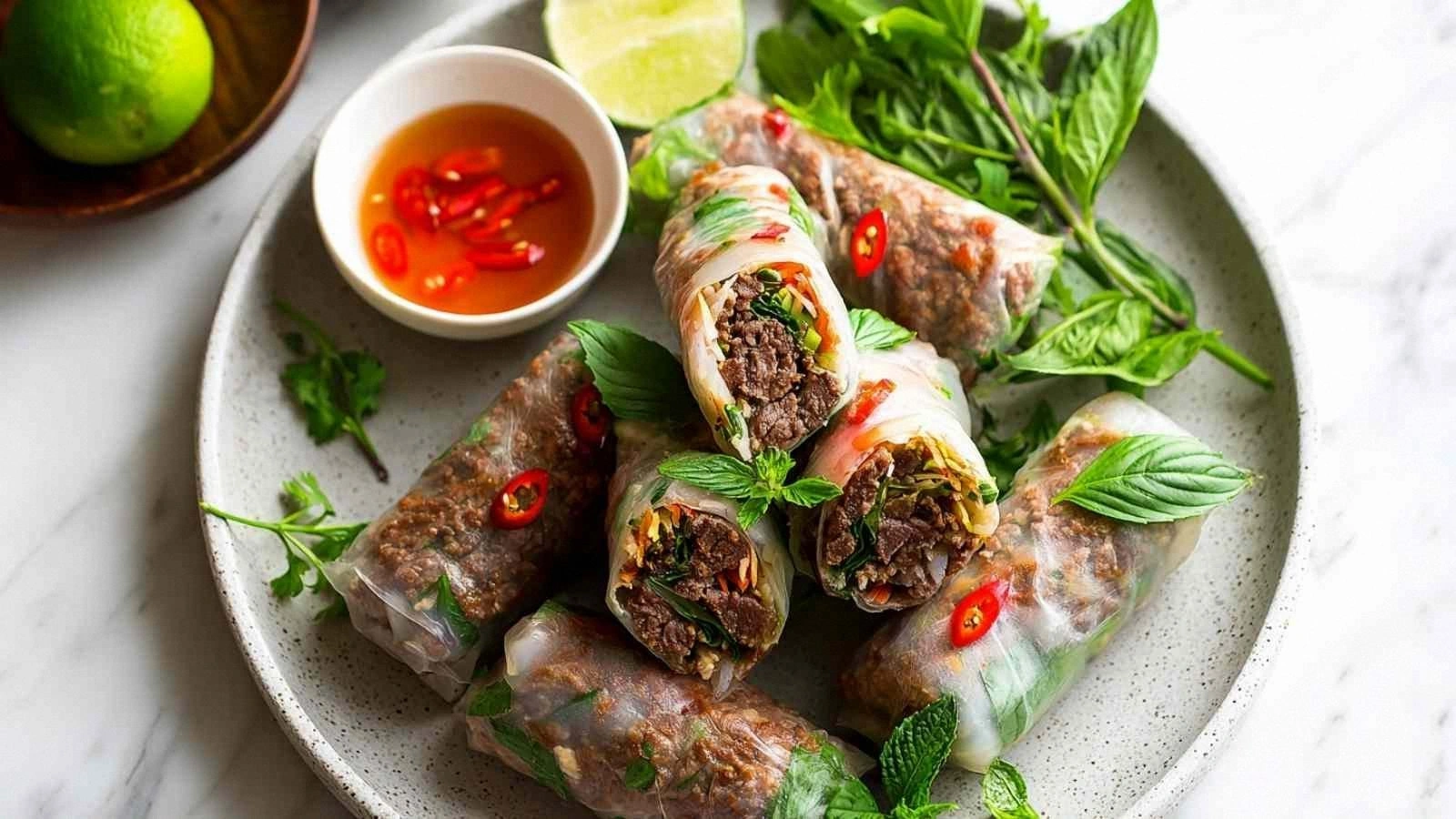
- Place a spoonful of the beef mixture onto a soaked rice paper sheet. Add a few slices of julienned carrots or cucumbers, a few green onions, and a splash of dipping sauce. This layering ensures each bite has a balanced mix of protein, crunch, and flavor.
- Fold the sides of the rice paper in, then roll tightly from the bottom up. The roll should be snug but not overstuffed. The rice paper will seal the edges, creating a neat, bite‑size parcel.
- Repeat the process until all the beef mixture is used, usually yielding about 8–10 rolls. Keep the rolls in a single layer on a plate, covering them with a damp towel to prevent drying out.
- Serve immediately with extra dipping sauce on the side. The rolls are best enjoyed fresh, with the rice paper still slightly chewy and the beef juicy. If you need to keep them warm, wrap them in foil and place in a preheated oven at 200°F for 5 minutes.
That's it—you did it. But hold on, I've got a few more tricks that'll take this to another level.
Insider Tricks for Flawless Results
The Temperature Rule Nobody Follows
Cooking the beef at the right temperature is key. If the heat is too low, the meat releases too much moisture, making the rolls soggy. Keep the skillet just below boiling; you’ll see a faint steam but not a full boil. This ensures the beef stays juicy and the sauce thickens nicely.
Why Your Nose Knows Best
Smell the sauce as it simmers. The aroma will shift from garlicky to sweet as the sugars caramelize. A strong, pleasant scent indicates the sauce has reached the right consistency. If the smell is too sharp, give it a minute more.
The 5-Minute Rest That Changes Everything
Let the beef mixture rest for 5 minutes after cooking. This allows the flavors to meld and the sauce to thicken. The rest also makes the meat easier to handle when you’re filling the rolls. Skipping this step often results in a watery filling.
Keep the Rice Paper Fresh
If you’re not using the rolls immediately, keep them in a sealed container with a paper towel to absorb moisture. This prevents the rice paper from becoming sticky. When you’re ready to eat, reheat the rolls briefly in a steamer for 30 seconds.
The Secret Ingredient for Extra Umami
A teaspoon of fish sauce adds depth without overpowering the herbs. It also balances the sweetness of the brown sugar. Add it at the same time as the soy sauce for an even distribution of flavor.
Rolling Technique for a Perfect Seal
Use a clean, damp kitchen towel to wipe the rice paper as you roll. The moisture keeps the paper pliable, preventing cracks. Rolling too quickly can cause the paper to tear; take your time for a neat finish.
Creative Twists and Variations
This recipe is a playground. Here are some of my favorite ways to switch things up:
Pineapple Paradise
Add diced pineapple to the beef mixture for a sweet, tropical kick. The acidity balances the richness of the meat, while the fruit adds a juicy burst. This version is perfect for summer gatherings.
Spicy Peanut Drizzle
Replace the dipping sauce with a spicy peanut sauce made from peanut butter, lime, and sriracha. The creamy texture contrasts with the crisp rice paper, and the heat keeps guests coming back for more.
Chicken & Veggie Roll
Swap the ground beef for shredded rotisserie chicken. Add shredded cabbage and bean sprouts for extra crunch. This lighter version is great for those watching calories but craving flavor.
Mushroom Umami Boost
Sauté sliced shiitake mushrooms with the garlic and shallot. The earthy flavor pairs beautifully with the basil, creating a deeper, more complex taste profile.
Mediterranean Fusion
Replace the rice paper with lavash or flatbread. Add feta cheese, olives, and a drizzle of olive oil. This twist merges Thai and Mediterranean flavors for a bold, unexpected dish.
Vegan Version
Use ground tempeh instead of beef and replace the oyster sauce with tamari. Add a splash of coconut aminos for sweetness. The result is a plant‑based roll that still delivers that satisfying umami.
Storing and Bringing It Back to Life
Fridge Storage
Store the rolls in an airtight container for up to 3 days. Keep the container cool and dry, and cover the rolls with a damp paper towel to maintain moisture. Before serving, let them sit at room temperature for 10 minutes.
Freezer Friendly
Wrap each roll individually in parchment paper, then place them in a freezer bag. They’ll keep for up to 2 months. When ready to eat, thaw overnight in the fridge.
Best Reheating Method
Reheat frozen rolls in a steamer for 5 minutes, or microwave on high for 30 seconds. Add a tiny splash of water before reheating; it steams the rolls back to perfection, preserving the chewy texture.