I still remember the first time I tried to make chicken lasagna. It was a disaster. The sauce was watery, the chicken tasted like rubber, and the noodles? Let's just say they had the texture of cardboard. My dinner guests politely picked at their plates while I mentally wrote my resignation letter from the kitchen. Fast forward through three weeks of obsessive testing, countless rotisserie chickens, and one near-fire incident, and I finally cracked the code. This chicken lasagna bake isn't just another recipe—it's the result of my culinary redemption arc.
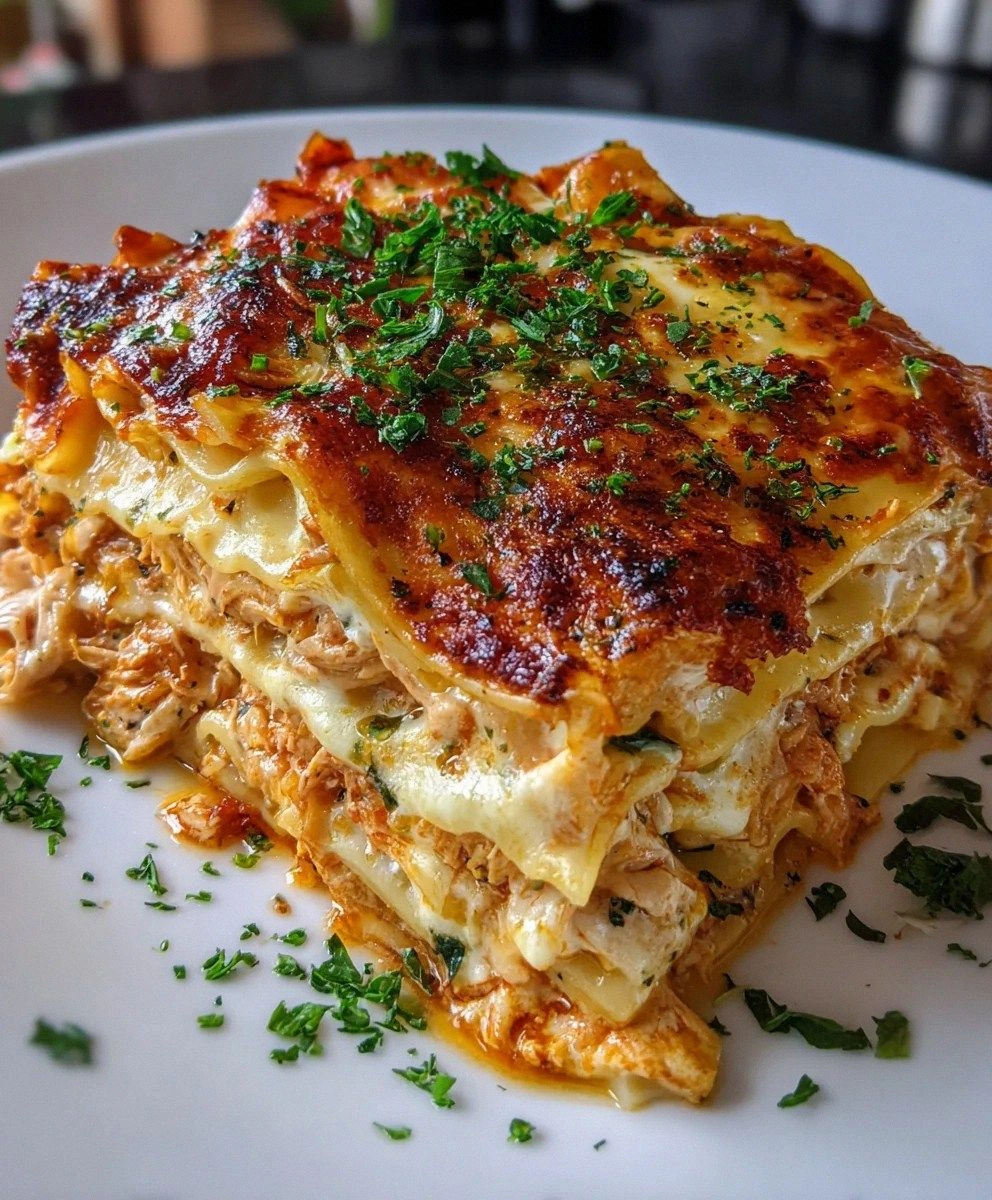
The moment you pull this golden beauty from your oven, your kitchen transforms into an Italian grandmother's dreamscape. The aroma hits you first: garlicky cream sauce mingling with melting cheese and perfectly seasoned chicken. Listen closely and you might hear the gentle bubbling of sauce as it caramelizes around the edges, creating those coveted crispy bits that make grown adults fight for corner pieces. Your neighbors will suddenly remember your name and show up with wine.
What makes this version different? Instead of the typical red sauce that weighs everything down, we're building layers of creamy, dreamy white sauce that hugs every noodle like a warm blanket. The chicken stays impossibly moist because we use a technique that locks in juices—no more dry, stringy poultry ruining your dinner party. And those crispy edges I mentioned? We achieve them through a specific baking sequence that creates textural contrast so good, you'll wonder why all lasagna doesn't come with built-in crunch.
Okay, ready for the game-changer? We're using cream cheese in the sauce. Before you panic about calories, hear me out. This isn't about being virtuous—it's about creating a sauce so luxuriously thick that it clings to every ridge of pasta, ensuring every bite delivers maximum flavor impact. Trust me on this one. Let me walk you through every single step—by the end, you'll wonder how you ever made it any other way.
What Makes This Version Stand Out
- Velvet-Smooth Sauce: Unlike watery versions that pool at the bottom, our cream cheese-enriched sauce coats each noodle like liquid silk, ensuring every bite delivers maximum flavor without making your lasagna slide apart when you cut it.
- Triple-Cheese Strategy: We don't just throw cheese at this and hope for the best. Jack melts like a dream, ricotta provides structure, and mozzarella creates that Instagram-worthy cheese pull that'll make your followers drool.
- Chicken That Actually Tastes Like Chicken: Through our specific seasoning and layering technique, the poultry stays moist and flavorful instead of turning into those sad, dry cubes that ruin most chicken lasagnas.
- No-Boil Noodle Hack: Traditional recipes make you boil noodles separately, but our sauce provides enough moisture to cook them perfectly in the oven, saving you time and a pot to wash.
- Make-Ahead Champion: This beauty gets better overnight, making it perfect for dinner parties or meal prep Sunday. The flavors meld into something even more spectacular the next day.
- Veggie Ninja Mode: The spinach melts into the layers, adding nutrients and color while being nearly undetectable to picky eaters. It's like healthy eating without the lecture.
Alright, let's break down exactly what goes into this masterpiece...
Inside the Ingredient List
The Flavor Base
Lasagna noodles aren't just structural elements—they're flavor highways that carry sauce to your taste buds. Traditional noodles work beautifully, but if you want to feel slightly virtuous while eating a pound of cheese, whole wheat varieties add a nutty complexity that plays gorgeously with our white sauce. The key is using no-boil noodles that'll absorb just enough sauce to become tender without turning mushy. Skip the cheap store brands here; they tend to break down into a gummy mess that'll make you question every lasagna decision you've ever made.
Salted butter forms the foundation of our roux, and please, for the love of all things delicious, use the real stuff. Margarine will betray you with its artificial flavor, leaving your sauce tasting like a chemistry experiment gone wrong. The butter should sizzle gently when it hits the pan, releasing those nutty, toasted milk solids that signal it's time to add flour. This isn't just about fat—it's about building flavor layers that'll make your grandmother weep with pride.
All-purpose flour might seem boring, but it's the thickening superhero that transforms our sauce from soup to something that'll stand up to a fork. The trick is cooking it just long enough to eliminate that raw flour taste without letting it brown. You'll know it's ready when it smells like shortbread cookies and has the texture of wet sand. Too pale and your sauce tastes like library paste; too dark and it becomes nutty in ways that clash with our delicate white sauce.
The Texture Crew
Ground black pepper isn't just a throwaway seasoning here—it's the subtle heat that keeps all that richness from becoming one-dimensional. Freshly ground is non-negotiable; those pre-ground tins have the flavor complexity of cardboard. The pepper should tickle the back of your throat just enough to make you notice, not enough to send you running for water. Add it early in the cooking process so it blooms and mellows into something sophisticated rather than aggressive.
Sea salt does more than make things salty; it amplifies every other flavor in the dish like a culinary megaphone. Different brands vary wildly in intensity, so start conservative and adjust at the end. The goal is to make the chicken taste more chicken-y, the cheese more cheese-y, the garlic more garlic-y—without anyone tasting the dish and thinking "wow, that's salty." It's the difference between a good cook and a great one, and yes, your guests will notice even if they can't articulate why.
Garlic powder gets a bad rap from the fresh-is-always-better crowd, but hear me out. Fresh garlic burns easily and can turn bitter in the oven, while powder distributes evenly throughout the sauce, creating consistent garlicky goodness in every bite. It's not about laziness—it's about control. The powder should smell pungent and slightly sweet, not dusty or stale. If yours has been sitting in the pantry since the Clinton administration, treat yourself to a new jar.
Onion powder brings a subtle sweetness that rounds out the sharp edges of our garlic and adds depth without the textural interference of actual onions. It's the quiet team player that makes everyone else taste better. Combined with the garlic powder, it creates what I call the "why does this taste so good?" factor that keeps people coming back for thirds even when they're full. Don't skip it—your taste buds will know something's missing even if your brain doesn't.
The Unexpected Star
Whole milk might seem like the obvious choice for creaminess, but we're using it strategically to create a sauce that thickens without becoming gloppy. The milk proteins denature slowly, creating a stable emulsion that won't break in the oven. Cold milk works best—adding warm milk to hot roux creates lumps that no amount of whisking will banish. Pour it slowly while whisking constantly, and watch as your paste transforms into something that looks like it came from a French bistro.
Cream cheese is our secret weapon for sauce stability and richness. Cut it into small cubes first, and let it melt gradually into the warm milk mixture. Resist the urge to crank up the heat—high temperatures make cream cheese grainy and prone to separating. The result should be smooth enough to coat a spoon and thick enough to leave trails when you drag a spatula through it. This isn't diet food, and we're not apologizing for it.
The Final Flourish
Shredded Jack cheese might seem like an odd choice for Italian-inspired food, but its melting properties are unmatched. It becomes liquid gold without separating into oily pools like some cheeses do. Buy it in blocks and shred it yourself—pre-shredded bags contain cellulose that prevents smooth melting. The Jack should disappear completely into the sauce, leaving behind its nutty, slightly sweet flavor without any stringy texture to distract from the chicken and noodles.
Ricotta cheese needs special handling to prevent your lasagna from becoming a watery mess. Let it drain in a fine-mesh strainer for at least 15 minutes—longer if you have time. Mix it with the egg and parsley just until combined; over-mixing makes it gummy and dense. The ricotta should be creamy and slightly sweet, not grainy or sour. If yours tastes like the inside of a gym sock, splurge on a better brand—this isn't the place to save three dollars.
Shredded mozzarella creates that iconic cheese pull that makes grown adults take photos of their dinner. Use low-moisture, whole milk mozzarella for the best melt. Fresh mozzarella has too much water and will make your lasagna soupy. Save the fresh stuff for caprese—this is about creating that golden, bubbly top that cracks under your fork to reveal molten cheese beneath. The mozzarella should brown in spots but not burn, creating a textural contrast that'll make you close your eyes in appreciation.
Baby spinach leaves aren't just for health points—they add a pop of color and a subtle earthiness that balances all that richness. The leaves wilt down to almost nothing, so don't be shy about packing them in. If you're dealing with spinach haters, chop it finely and they'll never know they're eating vegetables. The spinach also helps absorb excess moisture, keeping your layers distinct instead of swimming in a cheese soup.
The Protein Powerhouse
Cooked chicken is where most recipes go wrong, resulting in dry, flavorless protein that ruins the whole experience. Rotisserie chicken is your friend here—it's perfectly seasoned and stays moist through the baking process. Remove the skin and shred rather than dice; shredded chicken distributes evenly and creates better texture. Dark and white meat both work, but dark meat stays juicier. If you're cooking chicken specifically for this, poach it gently in seasoned water until just done, then let it rest before shredding.
The egg in the ricotta mixture isn't negotiable—it binds everything together and prevents the cheese layer from oozing out when you cut squares. Beat it lightly before mixing to avoid streaks of cooked egg white in your finished product. The egg should disappear completely into the ricotta, creating a cohesive mixture that slices cleanly. Skip it and your lasagna will collapse into a delicious but unphotogenic mess.
Dried or fresh parsley adds brightness and color to what could otherwise be a very beige dish. Fresh parsley has more punch but dried works in a pinch—use half as much if going dried. The parsley should be the last thing you add to the ricotta mixture so it stays vibrant. It's not just garnish; it provides a fresh counterpoint to all that richness, like a palate cleanser in herb form.
Everything's prepped? Good. Let's get into the real action...
The Method — Step by Step
- Start by making the roux: melt 4 tablespoons of butter in a heavy-bottomed saucepan over medium heat. You want it to foam gently but not brown—think of it as giving the butter a warm bath rather than a scalding shower. When the foaming subsides and you can smell something nutty and sweet, whisk in 4 tablespoons of flour all at once. Keep whisking constantly for 2-3 minutes until it looks like wet sand and smells like shortbread cookies. This is your foundation—rush it and your sauce will taste like raw flour all the way through.
- Now for the magic moment: slowly pour in 2 cups of cold whole milk while whisking like your life depends on it. Cold milk prevents lumps from forming, and slow pouring gives the roux time to absorb the liquid smoothly. The mixture will thicken dramatically at first, then relax into a smooth sauce. Keep whisking until it coats the back of a spoon and you can draw a line through it with your finger that stays put. This should take about 5-7 minutes total.
- Time to transform this basic white sauce into something spectacular. Reduce the heat to low and add your cubed cream cheese, one piece at a time, whisking until each piece melts completely before adding the next. This isn't the time to rush—high heat will make your sauce grainy and unappetizing. When all the cream cheese is incorporated, add 1 cup of shredded Jack cheese and whisk until smooth. The sauce should be thick enough to coat pasta but still pourable.
- Season your sauce with 1 teaspoon salt, 1/2 teaspoon black pepper, 1/2 teaspoon garlic powder, and 1/2 teaspoon onion powder. Taste and adjust—the sauce should be slightly over-seasoned since the noodles will dilute it during baking. Add the dried parsley now so it rehydrates in the warm sauce. Remove from heat and cover with a lid—this prevents a skin from forming while you prep everything else.
- In a medium bowl, combine the drained ricotta, beaten egg, and remaining parsley. Mix just until combined—over-mixing makes ricotta tough and rubbery. The mixture should be creamy and spreadable but thick enough to hold its shape. If it seems wet, drain it for a few more minutes. This is your structural layer, so getting the consistency right matters.
- Preheat your oven to 375°F. While it's heating, start your assembly. Spread 1/2 cup of sauce in the bottom of a 9x13 baking dish—this prevents the noodles from sticking. Arrange a layer of uncooked lasagna noodles over the sauce. They should fit snugly but not overlap too much. Break noodles if needed to fit, but try to keep the pieces large for easier serving later.
- Spread half the ricotta mixture over the noodles, using an offset spatula or the back of a spoon to create an even layer. Don't worry about perfection—slightly uneven adds character. Top with half the shredded chicken and half the spinach leaves. The spinach will seem like too much but trust the process—it wilts down to almost nothing.
- Pour 1 cup of sauce over the chicken and spinach, spreading it to the edges. Sprinkle with 1/2 cup of mozzarella. Repeat the layers: noodles, remaining ricotta, remaining chicken and spinach, another cup of sauce, and another 1/2 cup of mozzarella. For the final layer, add the last of the noodles, the remaining sauce, and the final 1 cup of mozzarella on top.
- Cover the dish with foil, tenting it so it doesn't touch the cheese. The tenting is crucial—if the foil touches the cheese, it'll stick and pull off half your topping when you remove it. Bake for 25 minutes covered, then remove the foil and bake for another 20-25 minutes until the cheese is golden and bubbly. The edges should be caramelized and crispy, while the center should be molten and irresistible.
That's it—you did it. But hold on, I've got a few more tricks that'll take this to another level...
Insider Tricks for Flawless Results
The Temperature Rule Nobody Follows
Room temperature ingredients aren't just chef snobbery—they're the difference between smooth sauce and lumpy disappointment. Take your milk, cream cheese, and eggs out of the fridge 30 minutes before you start cooking. Cold dairy shocks the roux, causing it to seize up into unpleasant bits that no amount of whisking will fix. I learned this the hard way when my sauce looked like cottage cheese and tasted like flour paste. Now I set everything out while I'm having my coffee, and my sauce comes out silky smooth every single time.
Why Your Nose Knows Best
Don't trust the clock—trust your senses. When the roux is ready, it'll smell like butterscotch and toasted nuts. When the sauce is properly seasoned, it'll make your mouth water just from the aroma. When the lasagna is done, the cheese should be golden with darker spots that look almost burnt but aren't. These visual and olfactory cues are more reliable than any timer. I once pulled a lasagna at exactly 45 minutes only to find the center still cold because my oven runs cool. Now I set a timer for the minimum time, then check every 5 minutes until it passes the sniff test.
The 5-Minute Rest That Changes Everything
I know it's torture, but let the lasagna rest for at least 5 minutes before cutting. This isn't just about avoiding molten cheese burns—though that's a nice bonus. The rest allows the layers to set up, transforming your lasagna from a sliding mess into neat, Instagram-worthy squares. The sauce thickens slightly as it cools, creating that perfect slice that holds its shape when you serve it. My husband once grabbed a piece straight from the oven, and it collapsed into what looked like lasagna soup on his plate. He still ate it, but the presentation left something to be desired.
The Make-Ahead Magic
This lasagna is actually better the next day, making it perfect for entertaining. Assemble it completely, cover tightly with plastic wrap, then foil, and refrigerate up to 24 hours. The noodles absorb some of the sauce, creating a more cohesive texture. When you're ready to bake, add 15-20 minutes to the covered time since you're starting from cold. I've served this to dinner party guests who had no idea I didn't slave over it all day. The flavors meld into something greater than the sum of their parts, creating depth that same-day lasagna just can't match.
Creative Twists and Variations
This recipe is a playground. Here are some of my favorite ways to switch things up:
The Mediterranean Escape
Swap the spinach for chopped artichoke hearts and sun-dried tomatoes, and replace the Jack with feta. Add a teaspoon of dried oregano and a pinch of red pepper flakes to the sauce. The briny artichokes and sweet-tart tomatoes transport you to a Greek island, while the feta adds tangy complexity. This version pairs beautifully with a crisp white wine and makes you feel like you're dining al fresco even when it's snowing outside.
The Mushroom Lover's Dream
Sauté 8 ounces of mixed mushrooms until they're deeply caramelized, then layer them between the chicken and sauce. Use a mix of cremini, shiitake, and oyster for maximum flavor complexity. The mushrooms add meaty umami that complements the chicken perfectly, creating a lasagna so satisfying that even carnivores won't miss the extra meat. A splash of white wine while sautéing the mushrooms deglazes the pan and adds another layer of flavor.
The Spicy Southwest Version
Add a diced jalapeño to the sauce, replace the Jack with pepper jack, and mix a cup of corn kernels into the ricotta layer. Top with crushed tortilla chips for the last 5 minutes of baking for crunch. This fusion might sound crazy, but the creamy sauce tames the heat while the corn adds pops of sweetness. It's like enchiladas and lasagna had a delicious baby that'll make you question everything you thought you knew about Italian food.
The Seafood Sensation
Replace the chicken with cooked shrimp and crab meat, and add a teaspoon of Old Bay seasoning to the sauce. The seafood stays tender through baking, and the Old Bay adds that coastal flavor that makes you want to eat this with a view of the ocean. Use half the amount of seafood since it shrinks less than chicken, and add it during the last 10 minutes of assembly so it doesn't get rubbery.
The Green Goddess
Mix 2 cups of chopped broccoli florets and 1 cup of peas into the ricotta layer, and replace the parsley with fresh basil. This vegetable-heavy version satisfies the "eat your greens" requirement while still feeling indulgent. The peas add sweetness, the broccoli provides crunch, and the basil makes everything taste like summer. Even kids who claim to hate vegetables devour this version—something about the cheese-to-vegetable ratio makes it feel like a treat rather than a chore.
The Breakfast Lasagna
Add 6 strips of cooked, crumbled bacon to the chicken layer, replace half the milk with heavy cream, and crack 4 eggs onto the top during the last 10 minutes of baking. The eggs cook to perfect runniness, creating a breakfast-for-dinner situation that'll make you question why all lasagna doesn't come with eggs. The bacon adds smoky depth, while the extra-rich sauce makes this feel like weekend brunch in casserole form. Serve it with mimosas and watch your brunch guests lose their minds.
Storing and Bringing It Back to Life
Fridge Storage
Leftovers (if you have any) keep beautifully in the refrigerator for up to 4 days. Store individual portions in airtight containers, or keep the whole dish covered tightly with foil. The flavors continue to meld and improve, making day-three lasagna arguably better than fresh. For best results, let it cool completely before refrigerating—hot lasagna in a cold fridge creates condensation that makes the top soggy. If you can't wait, drape a paper towel over the top before covering to absorb excess moisture.
Freezer Friendly
This lasagna freezes like a dream for up to 3 months. Cut it into individual portions, wrap each piece in plastic wrap, then foil, and store in a freezer bag. Thaw overnight in the refrigerator, then reheat in a 350°F oven for 15-20 minutes until heated through. The texture stays remarkably close to fresh, though the cheese might be slightly less stretchy. For best results, under-bake by 10 minutes if you know you're freezing it—this prevents overcooking during reheating.
Best Reheating Method
The microwave works in a pinch, but the oven is worth the extra time for restoring that fresh-baked magic. Place portions in an oven-safe dish, add a splash of milk around the edges to prevent drying, cover with foil, and bake at 350°F for 15 minutes. Remove the foil for the last 5 minutes to re-crisp the top. For microwave reheating, add a damp paper towel over the top and heat at 70% power to prevent rubbery cheese. Add a fresh sprinkle of mozzarella during the last 30 seconds for that just-baked appeal.