I still remember the Tuesday night I nearly set my kitchen on fire because a friend casually mentioned he’d never met a potato that didn’t bore him to tears. Challenge accepted, obviously. I stormed into the pantry, yanked out the russets, cracked a carton of eggs, and eyeballed the last of my beef bacon like a chef on a mission. Thirty-five frantic minutes later, the smoke alarm had sung its shrill aria, the dog was barking at the oven, and the entire apartment smelled like a campfire kissed a breakfast buffet. I yanked out a sheet pan of the most ridiculous, overstuffed baked potatoes—crackly skin, molten cheddar, runny yolks, bacon that shattered like spun sugar—and everything changed. One bite and my friend went suspiciously quiet; that’s when you know you’ve won the food argument forever.
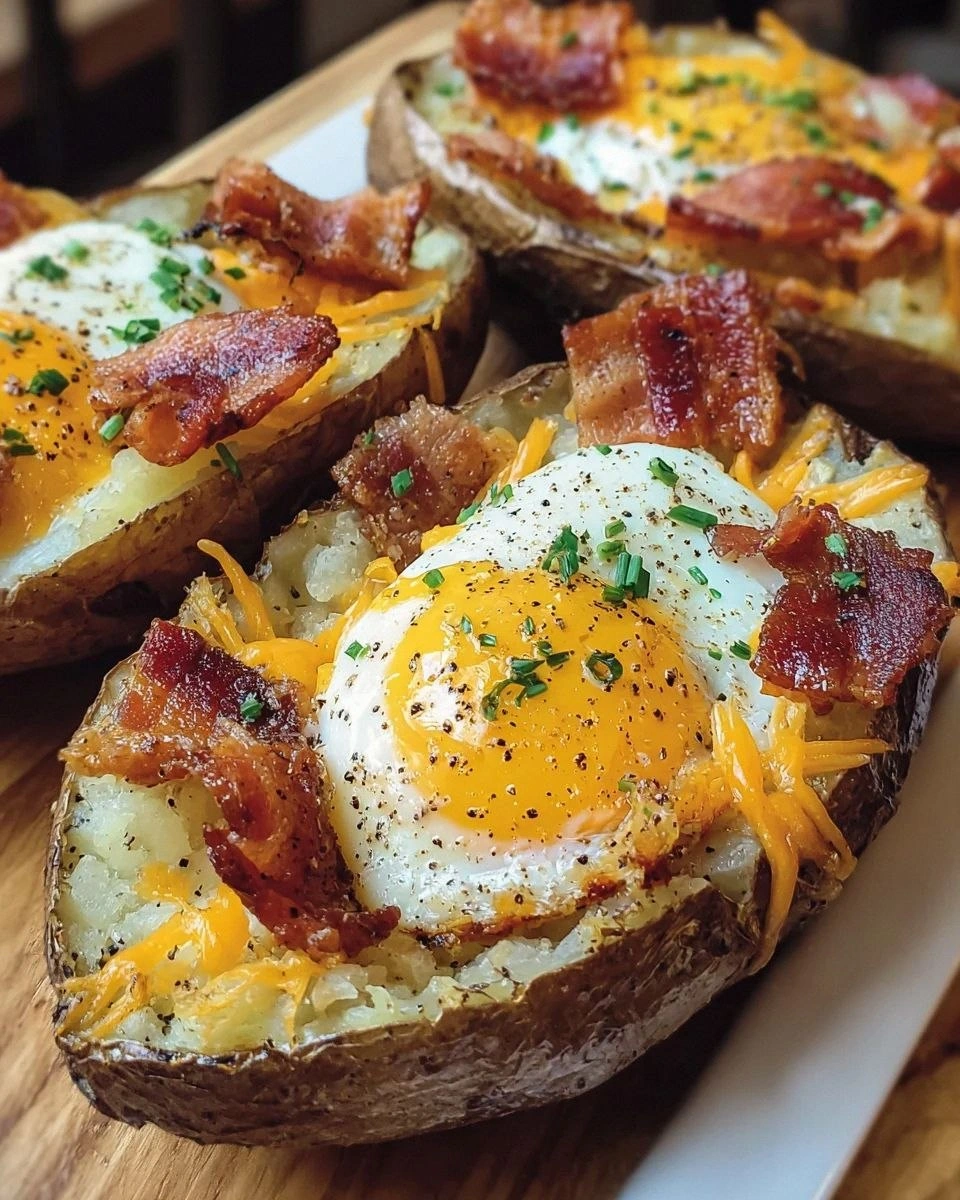
Picture this: fluffy potato flesh whipped with hot milk, butter, and a snowstorm of sharp cheddar, then spooned back into its own shell like a self-serving edible suitcase. A nest is pressed into that cloud, an egg slides in, and a confetti of crisp beef bacon sprinkles on top. Into the oven it goes for a final roast. The whites set into a silky blanket while the yolk stays shamelessly runny, ready to flood the whole situation in liquid gold. If you’ve ever thought twice about whether breakfast and dinner can coexist in the same bite, this recipe settles the debate with a mic-drop crunch.
Most recipes treat the potato as a sad, starchy bowl—a vehicle, nothing more. That’s where they lose the plot. The secret here is to treat the potato as both bowl and filling, amplifying its earthy sweetness with a quick roast in avocado oil, then whipping the scooped flesh so it rivals the creamiest Duchess potatoes. The egg isn’t just cracked on top; it’s nestled, coddled, almost pampered, so the heat kisses it gently from all sides. And the beef bacon? We’re not tossing raw bits on and hoping for the best. We pre-crackle it until it’s one shade away from burnt, so when it finishes in the oven it hits that perfect brittle snap that contrasts the pillowy potato.
Let me walk you through every single step—by the end, you’ll wonder how you ever made it any other way.
What Makes This Version Stand Out
Breakfast-for-Dinner Energy: This is the edible equivalent of wearing fuzzy socks to a business meeting—unexpected, comforting, and impossible not to smile about. It struts across the table like a loaded baked potato, then breaks into a sunny yolk sunrise that screams brunch vibes.
Texture Overload: You get the shattering potato skin, the cloud-light interior, the velvety egg white, the runny yolk, and the bacon crunch. Five textures, one forkful. It’s like a symphony where every instrument solos at the same time and somehow it works.
Beef Bacon Brilliance: Pork bacon can get flabby under the oven’s steam. Beef bacon stays snappy, plus its deeper, slightly gamier flavor stands up to the robust potato. If you’ve never tried it, you’re about to become a convert.
Make-Ahead Magic: Roast the potatoes and cook the bacon in the morning, stash them in the fridge, and you can assemble the final bake in fifteen minutes come dinnertime. Your future self will send you a thank-you card.
Cheese Strategy: Sharp cheddar melts quickly but still keeps a tangy backbone. Mixing half of it into the potato filling and sprinkling the rest on top creates two different cheese experiences—one creamy, one stretchy.
Egg Timing Precision: We’re not guessing doneness. A quick jiggle test at the eight-minute mark tells you everything. Too wobbly? Two more minutes. Just set at the edges? Pull immediately. You’ll feel like a breakfast wizard.
Alright, let’s break down exactly what goes into this masterpiece...
Inside the Ingredient List
The Flavor Base
Russet Potatoes: These are the heavyweight champions of fluff. Their high starch content means they bake up dry and light, ready to absorb obscene amounts of butter and milk. Skip waxy varieties; you’ll end up with gummy filling that refuses to mingle with the egg. Pick potatoes that feel heavy for their size and smell faintly of earth—never green-tinged or spongy.
Avocado Oil: Neutral, heat-stable, and just fancy enough to make you feel like you’ve got life together. It lets the potato flavor sing while helping the skin dehydrate into a crispy shell. Olive oil works, but its grassy notes can bully the bacon.
The Texture Crew
Beef Bacon: Cut from the short plate, beef bacon carries a mineral depth that pork can’t touch. It crisps faster, browns deeper, and brings a smoky swagger without the porky sweetness. If your grocery store hides it by the kosher meats, march over there like you own the place.
Sharp Cheddar: Aged at least twelve months, this cheese hits you with a tangy punch that slices through the potato’s richness. Pre-shredded cellulose-coated cheese refuses to melt smoothly; grate your own or risk a gritty rebellion.
The Unexpected Star
Hot Whole Milk: Temperature matters. Cold milk tightens the potato starch, creating glue. Warm milk relaxes the starches into a silky purée. Heat it until it steams, not boils—boiling milk creates a protein skin that looks like alien cling film.
Melted Butter: Butterfat equals flavor insurance. It coats each starch granule so the filling tastes luxurious, not watery. Use unsalted so you control the salinity; potatoes are seasoning divas and will tell you exactly how much they need.
The Final Flourish
Large Eggs: Size matters. Large eggs fit perfectly into the potato cradle; extra-large overflow like a toddler in a kiddie pool. Bring them to room temperature first so the whites set evenly with the yolk still molten.
Salt & Pepper: Season at three stages: before roasting the potatoes, while whipping the filling, and a final whisper over the egg. Each layer builds a flavor skyscraper instead of a one-note salt lick.
Everything’s prepped? Good. Let’s get into the real action...
The Method — Step by Step
- Crank your oven to 425 °F (220 °C) and slide a heavy sheet pan onto the middle rack to heat up like a sauna. While it warms, scrub four medium russets under cold water, then stab each one six times with a fork—deep enough to vent steam but not so deep you pierce through to the other side. Rub them all over with two tablespoons of avocado oil, then shower with one teaspoon kosher salt and half a teaspoon cracked black pepper. The salt draws moisture from the skin so it bakes into a crispy shell; skipping this leaves you with leathery jackets nobody wants to eat.
- When the oven hits temperature, carefully place the potatoes directly on the hot pan—hearing that sizzle when skin meets metal is pure ASMR magic. Roast for 45 minutes, flipping halfway, until a knife slides in with zero resistance. While they cook, lay six strips of beef bacon on a wire rack set over a foil-lined tray and bake on the top rack for 12–14 minutes, until the edges curl and the fat turns translucent mahogany. You want it shy of fully crisp; it will finish later with the egg. Drain on paper towels, then give it a rough chop so every bite gets a bacon shard.
- Transfer the blistered potatoes to a cutting board and slice off the top third lengthwise, creating a lid. Scoop the fluffy insides into a bowl, leaving a quarter-inch wall so the shell holds its shape. Mash the steaming potato with three tablespoons of melted butter, a quarter cup of hot whole milk, half the shredded cheddar, and a confident pinch each of salt and pepper. The mixture should be looser than mashed potatoes but thick enough to mound—think creamy cloud, not soup.
- Spoon the whipped filling back into the shells, mounding it slightly. Use the back of a spoon to press a canoe-shaped well deep enough to cradle an egg but not so deep you pierce the bottom. Crack one egg into each well; if a rogue shell fragment dives in, fish it out with half an eggshell—shell attracts shell like a magnet and saves you from crunchy surprises.
- Nestle the potato boats onto the hot sheet pan, scatter the chopped bacon around them, and slide everything back into the oven for 8–10 minutes. You’re looking for whites that have set like silk stockings and yolks that jiggle like a confident dance move. If you like firmer yolks, push to 12 minutes, but beware: there’s no undoing an overcooked egg.
- Pull the pan, shower the remaining cheddar over the potatoes, and switch the oven to broil. Park the pan on the top rack for 60–90 seconds—watch it like a hawk—until the cheese blisters into little bronze bubbles. This is not the moment to answer a text; broilers can turn cheddar into charcoal faster than you can say “takeout.”
- Sprinkle with freshly cracked black pepper and a confetti of chives if you’re feeling Instagrammy. Serve immediately on warm plates so the yolk stays runny while you ferry them to the table. Listen for the collective gasp when forks pierce the yolk and golden lava spills onto the cheesy potato cloud. That sound? That’s dinner victory.
That’s it—you did it. But hold on, I’ve got a few more tricks that’ll take this to another level...
Insider Tricks for Flawless Results
The Temperature Rule Nobody Follows
Most recipes say “bake until done” and leave you playing yolk roulette. Instead, stab an instant-read thermometer into the center of the egg white; you want 165 °F for set whites and a yolk that’s still fluid. If you hit 170 °F, you’ve entered hard-boil territory—safe, but you’ll lose the saucy waterfall effect that makes people weep happy tears.
Why Your Nose Knows Best
When the cheddar under the broiler smells like Sunday morning grilled-cheese sandwiches, it’s done. Before that, it’s rubbery; after that, it’s bitter. Trust the aroma over the clock—ovens vary, noses don’t. My neighbor swears by this and she hasn’t served a single burnt potato since 2014.
The 5-Minute Rest That Changes Everything
Once out of the oven, tent the potatoes loosely with foil for five minutes. The residual heat finishes setting the whites without overcooking the yolk, and the cheese relaxes into a glossy blanket instead of seizing into plastic. Skip the rest and the first bite will scald your tongue; nobody tastes flavors when their mouth is in survival mode.
Shell Preservation 101
Leave a quarter-inch wall when scooping. Go thinner and the shell collapses under the egg’s weight. Go thicker and you run out of space for the luscious filling. I eyeball it using the width of my thumb nail—culinary training at its finest.
Creative Twists and Variations
This recipe is a playground. Here are some of my favorite ways to switch things up:
Smoky Southwest
Swap cheddar for pepper Jack, fold a teaspoon of chipotle purée into the potato filling, and top with pico de gallo and a whisper of cilantro. The smoke from the chipotle marries the beef bacon like they were born to tango.
French Onion Dream
Caramelize onions for forty minutes until they’re jammy, stir half into the filling, and crown the potato with Gruyère instead of cheddar. Under the broiler the cheese forms that iconic Gruyère blister you see on French onion soup—same flavor profile, handheld form.
Mediterranean Escape
Replace bacon with crumbled lamb merguez, crumble feta on top, and finish with a drizzle of harissa yogurt. The spicy sausage and cooling yogurt create that push-pull that keeps you coming back for “just one more bite” until the tray is mysteriously empty.
Truffle Shuffle
Add a few drops of white truffle oil to the whipped potato and shave black truffle over the finished dish. It’s outrageously extra, but if you’re trying to impress a date who thinks truffle equals true love, this is your ace in the hole.
Green Goddess Lite
Stir chopped spinach and artichoke hearts into the filling, then top with a spoonful of herby Greek yogurt. It tastes like your favorite party dip took a spa day and came back refreshed and bikini-ready.
Kids’ Pizza Boat
Use mozzarella, fold mini pepperoni into the filling, and serve with a side of warm marinara for dipping. Children will trade their dessert for this—tested on seven nieces and nephews, proven effective.
Storing and Bringing It Back to Life
Fridge Storage
Cool the potatoes completely, then park them in an airtight container lined with paper towels to absorb excess moisture. They’ll keep three days, but the yolk will firm up over time—best to reheat gently. Don’t stack them; the weight can rupture the shells and you’ll lose the precious cargo.
Freezer Friendly
Freeze before the final egg addition. Wrap each stuffed shell in plastic wrap, then foil, and freeze up to two months. When ready to serve, thaw overnight in the fridge, add a fresh egg, and bake as directed, adding five extra minutes to compensate for the chill. The texture won’t be quite as fluffy, but it beats drive-through breakfast every time.
Best Reheating Method
Skip the microwave—it turns the bacon flaccid and the egg rubbery. Instead, warm potatoes in a 350 °F oven for 12 minutes, adding a tiny splash of water to the pan to create steam that keeps the filling moist. If you’re in a rush, the air-fryer at 325 °F for six minutes revives the crisp edges like a charm.